

Data-Driven Pregnancy – The Algorithm That Might Predict Labor
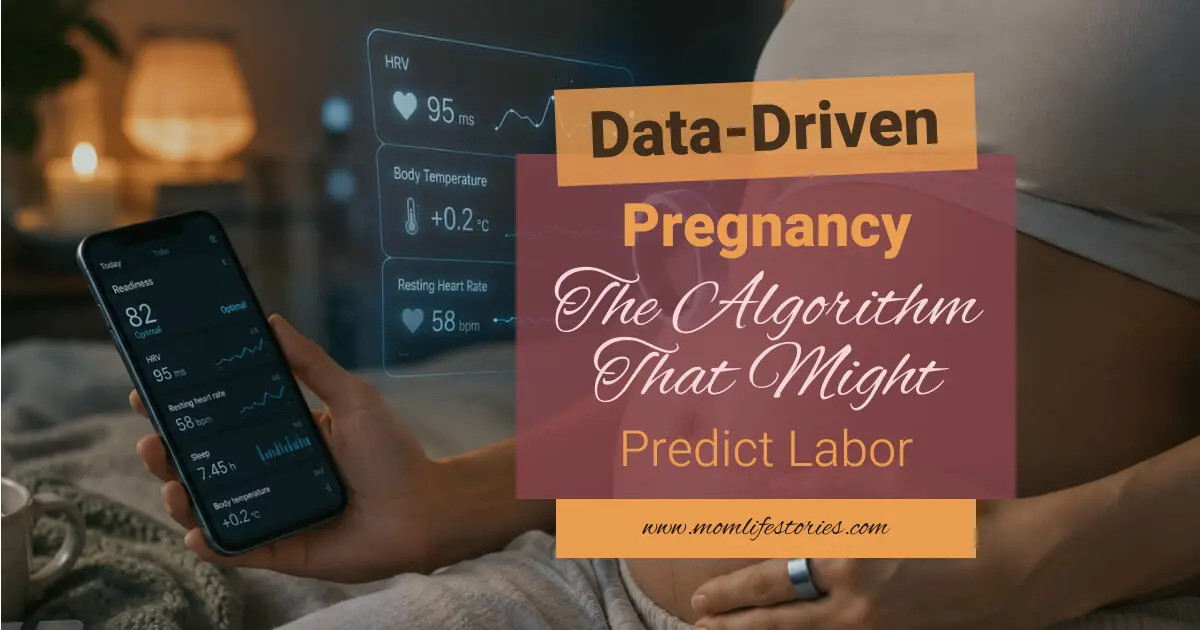
Back in our grandparents’ time, childbirth was seen as something instinctive and unpredictable. Most advice sounded something like: “Your body will know what to do.” Today, many pregnant women are practically wearing a mini laboratory on their wrist. Smartwatches, rings, and pregnancy apps track heart rate, sleep, body temperature, stress levels, and even fetal movement — all in the hope of predicting when labor might begin.
This is the world of data-driven pregnancy, and by 2026, it’s no longer science fiction. For many American moms-to-be, it’s simply part of everyday life. But can an algorithm really understand your body better than you do? Where is the line between helpful information and the anxiety that can come from constant monitoring? And do these devices truly make pregnancy feel calmer — or do they sometimes make it even harder to quiet your mind?
Let’s take a closer look at how technology is transforming pregnancy, labor, and motherhood in 2026.

Smart Pregnancy Devices – What Moms-to-Be Are Using in 2026
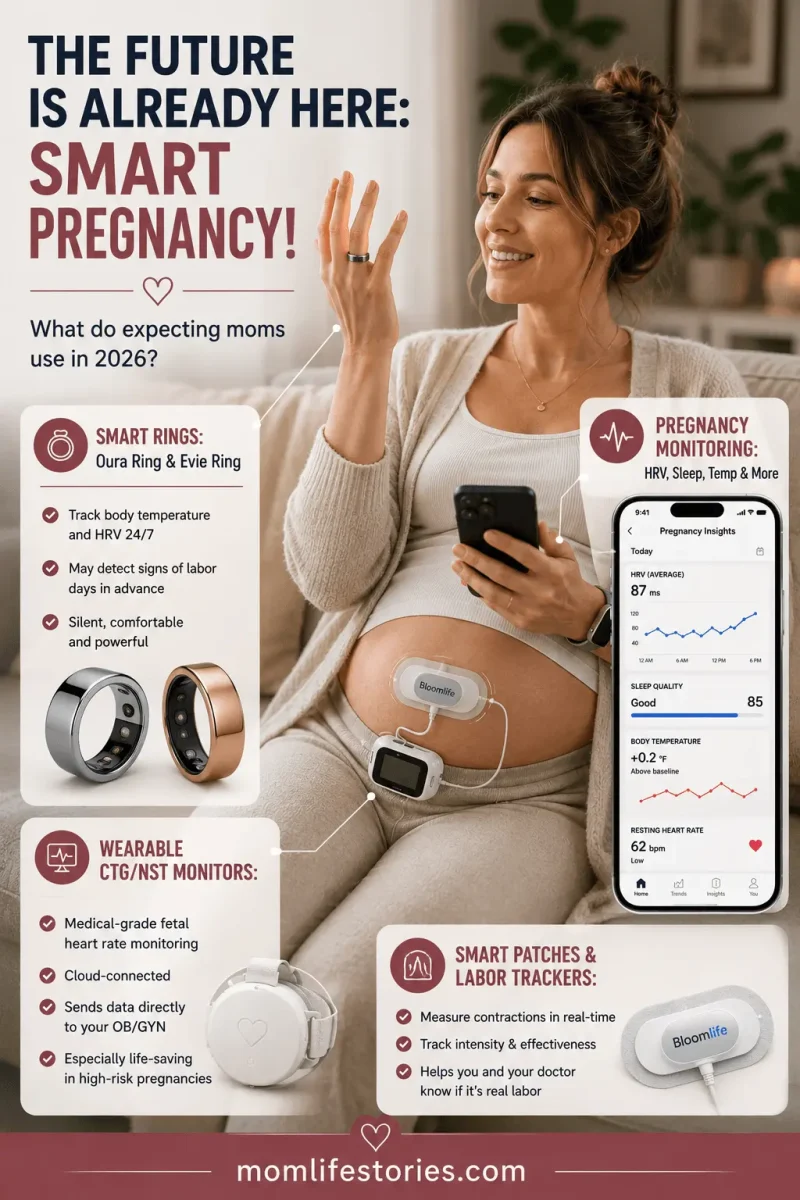
Today’s pregnancy forums are no longer filled with just bump photos and nursery inspiration. More and more moms-to-be are sharing HRV graphs, sleep data, body temperature trends, and wearable insights. Data-driven pregnancy has quickly become part of everyday life. Among the most popular devices are the Oura Ring and Evie Ring. These smart rings continuously track body temperature, heart rate, and heart rate variability (HRV), and certain patterns may even hint that labor is approaching.
They don’t send dramatic alerts or panic-inducing notifications — they simply collect data quietly in the background for you to interpret over time. At the same time, home fetal monitoring technology has evolved rapidly. Portable CTG and NST devices now offer far more than basic handheld Dopplers. Some models provide medical-grade fetal heart monitoring and can even send data directly to healthcare providers. For higher-risk pregnancies, this can offer an extra layer of reassurance.
One of the newest trends is the rise of smart patches and labor-tracking devices. These tools don’t just measure how often contractions happen — they also analyze their intensity and effectiveness. This can help both moms and doctors better understand whether active labor may actually be starting.
👉 If your smartwatch, app, or body suddenly makes you wonder “Wait… is this actually labor?” — this article can help you recognize the real signs of labor and when it’s truly time to go: Oh My God, Are These Labor Contractions? – Signs It’s Really Time to Go

AI and Personalized Birth Plans – When the Algorithm Is Watching Too
By 2026, artificial intelligence has fully entered the world of pregnancy — and it’s now about much more than simple chatbots or automatic text suggestions. AI-powered pregnancy support has grown into an entire industry of its own. One of the most fascinating developments is the rise of personalized birth plan automation.
Some platforms are already able to model different labor and delivery scenarios based on a mother’s medical history, previous birth experiences, body type, and personal preferences. It can almost feel like having an experienced professional sitting beside you who remembers every tiny detail. Of course, AI cannot replace your doctor or midwife. But it can help you arrive at appointments feeling more informed, more prepared, and ready to ask better questions.
Can AI Chatbots Really Reassure You?
AI chatbots offering emotional support may be spreading even faster than pregnancy tracking devices themselves. Because when you wake up at 2 a.m. in a panic because you haven’t felt your baby move, the first thing many moms do is reach for their phone — and there’s almost always an AI assistant “awake” and ready to answer.
These systems can provide quick, calming, and fact-based responses to questions like: “Is this normal?” or “When should I call my doctor?”
Part of their purpose is also to help reduce the overload on emergency lines and overnight medical services.
But there’s a very important limit here: AI is not infallible.
So-called “AI hallucinations” — when a system confidently presents inaccurate or completely false information — can become especially dangerous in medical situations.
That’s why AI can be a helpful tool, source of information, and emotional support, but medical decisions should never rely entirely on it.
As the American College of Obstetricians and Gynecologists (ACOG) also emphasizes, technology can support pregnancy care — but it should never replace real medical professionals and human judgment.
Can HRV Really Predict Labor?
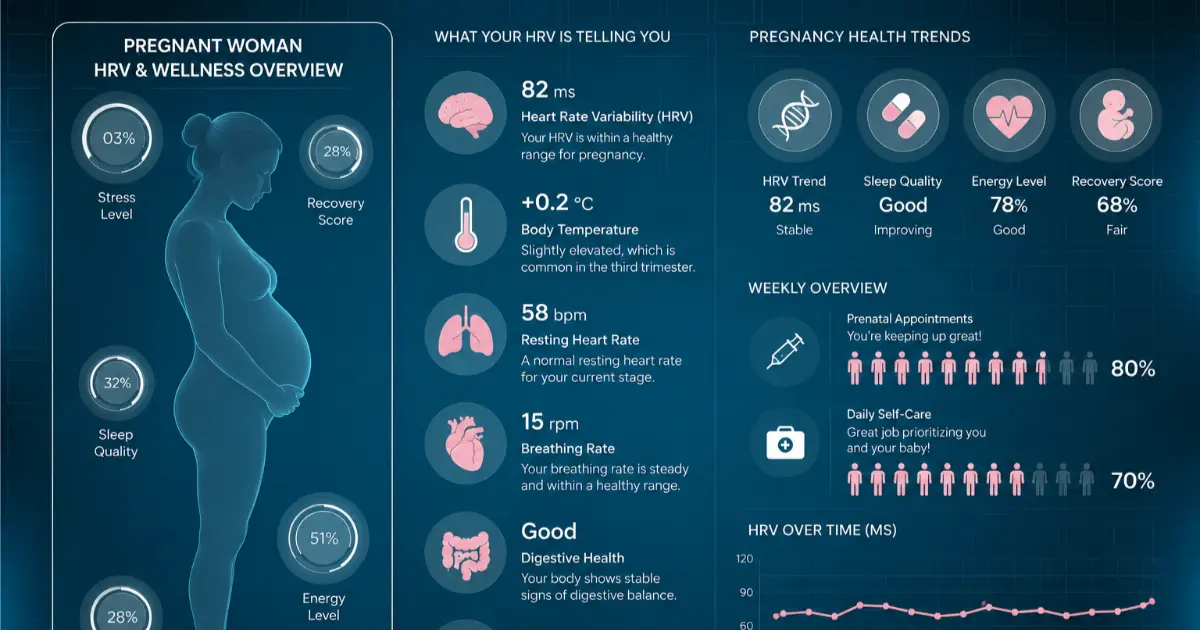
This is one of the most fascinating areas in the world of smart pregnancy technology. HRV, or heart rate variability, measures how much time changes between individual heartbeats. It may sound strange at first, but your heart is not supposed to beat at a perfectly steady rhythm. In fact, greater variability usually means your nervous system is adapting well and your body is in a more balanced state. As labor approaches, however, the body gradually begins to switch into a different mode.
The sympathetic nervous system — the system responsible for stress and intense physical response — becomes more active, and HRV levels often start to decrease. That’s exactly why smart rings have become so interesting in pregnancy tracking. Several moms-to-be have reported — and a 2024 Stanford pilot study also explored this — that the Oura Ring may have detected signs of approaching labor 12–36 hours earlier through combined changes in body temperature and HRV.
Of course, it’s important to say that this is not yet an official medical standard, and the research is still in its early stages. But the direction is becoming increasingly clear: biometric data is getting closer to becoming a genuinely useful tool in pregnancy monitoring.
📺 YouTube Recommendation: “What is HRV? The Wellness Metric Everyone Should Track”
A simple and beginner-friendly explanation of what HRV actually means and why it may matter during pregnancy.
The Dark Side of Technology: When Data Becomes a Source of Stress
This is the part we need to talk about honestly. Across American parenting forums — from BabyCenter to What to Expect — more and more moms are sharing the same experience: sometimes data creates anxiety instead of reassurance. Many women now start their mornings by checking their Oura app before even getting out of bed: How did I sleep? What’s my HRV? What does my readiness score say today?
And if the numbers look worse than expected, it can affect the mood of the entire day. In online communities, this already has a name: “data anxiety.” Another growing concern is that technology can slowly overpower our own instincts. What happens when your body feels like something is changing, but the app says everything looks normal? Or the other way around?
Experts say data should support our decisions — not control them. Because if your smartwatch tells a different story than your body does, that doesn’t automatically mean the watch is right.

Ethics and Privacy: Who Owns Your Pregnancy Data?
In 2026, privacy has become one of the most sensitive topics in the world of pregnancy technology — especially in the United States after the reversal of Roe v. Wade. Because smart pregnancy devices come with a less visible, but incredibly important question: who actually has access to your most personal data?
Smart rings, pregnancy apps, and cloud-based monitoring devices collect huge amounts of information: body temperature, sleep patterns, heart rate, stress levels, and even location data. And all of that information ends up stored somewhere on a server. What many moms don’t realize is that some apps may still share or sell anonymized data to advertisers or third parties.
And in the U.S., wearable-device data is not always protected under the same medical privacy laws as traditional healthcare records. Another growing concern is how insurance companies might use this information in the future. If your data consistently shows high stress, poor sleep, or possible pregnancy-related risks, could that eventually affect your coverage or insurance costs?
Right now, the legal boundaries are still unclear — but the debate is already happening. That’s why one of the most important rules is also one of the simplest: always read the privacy policy before trusting an app or device with your data. Because technology may be tracking your body — but your instincts should still be your most important guide.
👉If you’d like to walk this journey feeling more prepared, more confident, and a little less worried, visit the Little Lifesavers page and explore our free downloadable resources. They’ll help you stay organized, plan ahead, and create the kind of calm and clarity you need most right now.
👉And if birth stories, real experiences, and the emotional journey of childbirth matter to you, you’ll find more honest reflections and preparation in our Childbirth section.