

The Reality of C-Section Recovery – What No One Ever Told You
C-section recovery often doesn’t start the moment you first get out of bed after surgery — it starts much earlier: in your mind, in your questions, in your fears. Maybe you’re preparing for a vaginal birth, maybe you have a scheduled C-section, or maybe it’s only in the back of your mind as a “Plan B” — the last resort.
But it’s still birth.
Trust me, I know what I’m talking about. I wasn’t preparing for a C-section either, and yet that’s how my births unfolded. And that’s exactly why I understand how valid it is to want to know in advance what will happen to you — physically and emotionally.
This article is about preparation and informed choices. About how to tune into a C-section — whether planned or unexpected — with more awareness and a stronger sense of inner safety.
“Love and care are the most important pillars; they are what our ability rests on to process every stressful situation, challenge, and change.”
A child is a blessing in our lives — but the road to becoming a mother and father often still feels unknown when we first find out we’re expecting. During pregnancy, there’s so much to learn, and preparing for birth also means talking about C-sections. Because they can be life-saving, they can happen unexpectedly, or sometimes they’re planned from the start for medical reasons.
Even if you’re mainly preparing for a vaginal birth, it still matters to understand this possibility. The goal isn’t to “choose” surgery — it’s to be prepared. To have the kind of inner security that comes from not being caught off guard by what’s happening to your body and your birth story.
What is a C-section?
A C-section is a surgical procedure in which a baby is delivered through an incision made in the mother’s abdomen and uterus. It is performed when a vaginal birth is not possible or when continuing labor would pose a higher risk to the mother or the baby.
Today, it is one of the most commonly performed abdominal surgeries, and a significant number of births are completed this way. Although it is a routine and generally safe procedure, it is still major surgery and comes with potential risks and complications. That’s why C-section recovery is not just “a few uncomfortable days,” but a complex process of physical healing and emotional adjustment.
Emotional preparation: when control starts to slip away
In everyday life, we’re used to planning, managing, and staying in control — our work, our homes, our schedules, our lives. Birth, however, doesn’t work that way. We can’t know exactly when it will start, how long it will last, what it will bring up emotionally, or how we’ll react in the moment. That unpredictability can easily create anxiety.
When that happens, it’s a natural response to cling to information, make plans, and run through different scenarios in our minds. It’s no coincidence that more and more women feel fear around birth itself. At the same time, it’s important to understand that while vaginal birth has many biological and psychological benefits, a C-section is major abdominal surgery and places real demands on the body.
Conscious preparation isn’t about increasing fear — it’s about easing it.

Planned and unexpected C-sections: two very different inner experiences
When it’s known in advance that a C-section will be necessary, many people find reassurance in knowing exactly what to expect. This clarity can reduce uncertainty and often makes emotional adjustment after birth easier.
It’s a very different situation when the decision is made during labor — especially if the mother was preparing for a vaginal birth. Feelings of guilt, disappointment, and self-blame often surface. Old and deeply rooted misconceptions may appear as well, such as the idea that only vaginal birth counts as a “real” birth. This is simply not true. What truly matters is that both mother and baby are healthy.
There’s no way to “practice” for this kind of situation in advance. Still, having some understanding of what might happen can make a real difference. That knowledge can serve as an emotional safety net during the C-section recovery process and help you make sense of what ultimately happened.
What is worth preparing for in advance?
A real sense of safety often doesn’t come from everything going exactly according to plan, but from understanding what is happening to you and why.
It’s worth taking time to:
And perhaps most importantly: trust your body. Trust that it was capable of carrying life — and that it is capable of healing as well. That trust can become a powerful anchor during the hardest moments of c-section recovery.
Common fears before a C-section
Alongside physical preparation — such as hygiene, washing your hair, removing jewelry, and following eating or drinking restrictions — emotional preparation is just as important. It can help to reflect on what expectations you’re carrying, what you’re afraid of, and what kind of environment would make you feel safest.
Many women worry about feeling vulnerable after surgery. They fear the pain, how they’ll manage caring for their baby, or whether bonding might be affected. These fears aren’t exaggerations — they’re deeply human concerns. Part of preparation can simply be allowing yourself to have these thoughts, instead of brushing them aside with “it’ll be fine” or “we’ll deal with it somehow.”
What to pack if a C-section is a possibility
The first days of c-section recovery can be physically demanding, so small, practical items can make a meaningful difference:
If you’d like, I can also make this section more checklist-style for a printable or hospital-bag graphic
What happens during a C-section?
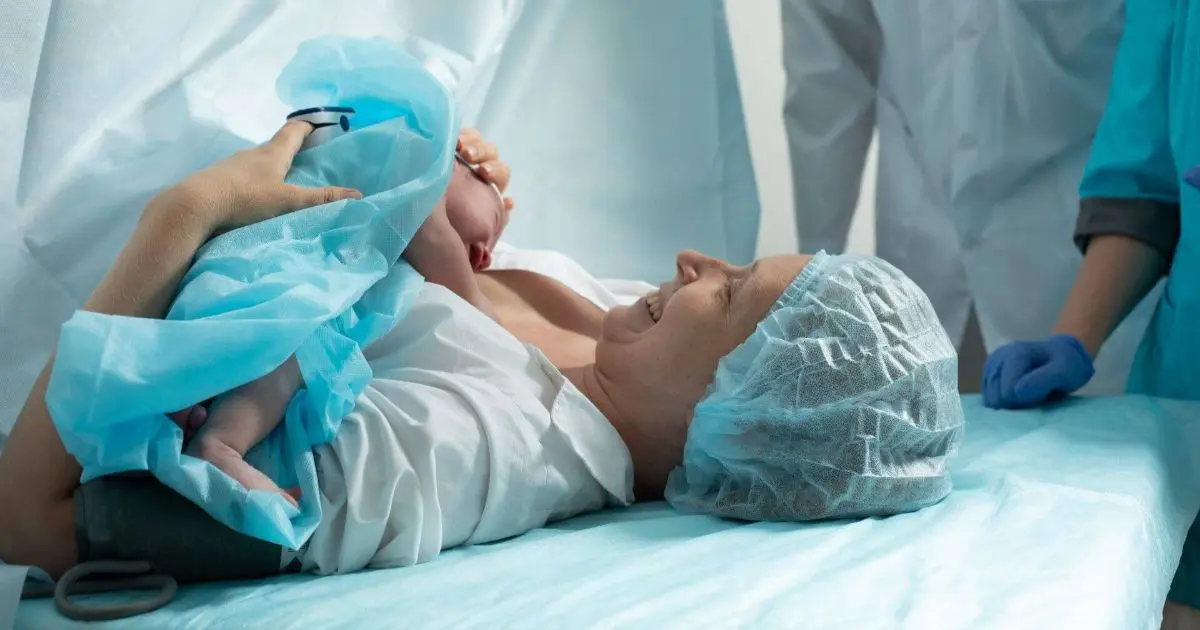
Today, the procedure itself usually takes a relatively short amount of time. In most cases, it’s performed under spinal or epidural anesthesia, which means the mother is awake and able to stay connected to her surroundings. The abdominal wall is opened using a gentle surgical technique — the muscles aren’t cut, but carefully separated. After the baby is born, the placenta is removed, followed by closing the abdominal layers.
After surgery, as soon as the mother’s condition allows, the baby may be placed on the chest for skin-to-skin contact and the first breastfeeding attempt. This early connection can strongly support the emotional side of C-section recovery.
A common myth is that milk production starts later after a C-section. In reality, milk production begins hormonally when the placenta is delivered — regardless of how the baby is born. Frequent nursing, close physical contact, and skin-to-skin time all play a key role in supporting breastfeeding.
The recovery period at home: what to watch for
In the days following surgery, gentle movement such as walking helps support healing and reduces the risk of complications. The first 7–10 days are a more sensitive period, making it especially important to monitor the incision closely.
Warning signs may include:
The postpartum recovery period lasts about six weeks. However, c-section recovery doesn’t always end exactly at that point — emotionally, it often takes longer, and that is completely okay.
Emotional experiences after a C-section
The hormonal processes of birth affect not only the body, but emotions as well. With a C-section — especially when labor doesn’t occur — these processes can unfold differently, sometimes leading to feelings of emptiness, a sense of loss, or a temporary emotional distance.
Your baby’s adjustment may also look different. More cuddling, skin-to-skin contact, and patience can make a meaningful difference for both of you.
Baby blues, postpartum depression, or post-traumatic symptoms are the result of a complex interaction between hormonal and emotional factors. They are not the mother’s fault, and they are not signs of weakness. Healing is supported when your feelings are given space, when they aren’t minimized or dismissed, and when you ask for help if and when you need it.
👉 Fear, uncertainty, then strength and arrival. The Real Birth Story: From Fear to Strength shows how the birth experience can shape you — even when it doesn’t go the way you planned.
Closing: the way you give birth is not a measure of love
Preparation isn’t about control — it’s about care. Birth is a miracle, and what defines it isn’t how your baby arrives, but the love and presence with which you welcome them.
If the idea of C-section recovery feels overwhelming right now, remember this: you don’t have to do it alone. You don’t have to feel okay right away. It’s enough to take things one step at a time — held, supported, and surrounded by care.
👉 If you’d like to walk this journey feeling more prepared, more confident, and a little less worried, visit the Little Lifesavers page and explore our free downloadable resources.
They’ll help you stay organized, plan ahead, and create the kind of calm and clarity you need most right now.
👉If you’re navigating the physical and emotional realities of childbirth — including recovery experiences like C-sections — you’ll find more honest guidance and preparation in our Childbirth section.