

Vacationing with a Baby: Heat, Sunlight, and Safety – How to Do It Right
Summer is slowly approaching, and forward-thinking parents who long for travel and a little escape have already started planning their vacations. Vacationing with a baby can bring both excitement and uncertainty at the same time. As summer gets closer and we begin organizing our trip, the question inevitably comes up: is it really safe to travel with such a tiny baby? Vacationing with a baby isn’t impossible — but it does require thoughtful preparation.
We absolutely love to travel, and over the years we’ve visited countless places and countries. When our first child was born, we couldn’t wait for her to experience the same joy and sense of adventure that traveling has always given us.
For our first trip together, proximity and practicality were our top priorities. We chose a seaside destination that we could reach by car in about six hours. That way, we could plan everything around our daughter’s needs and bring along anything that might be important for her — or for us.
Since then, we’ve taken many trips as a family, and I’ve gathered a lot of experience about how vacationing with a baby can truly be safe, calm, and genuinely joyful.
Summer Heat Is No Joke – How to Protect Your Baby While Traveling
In summer, most of the focus tends to be on UV protection — but overheating is just as serious a risk. A baby’s body isn’t yet able to regulate temperature efficiently. Sweating doesn’t become an effective cooling mechanism until around 7–8 months of age, which means babies can overheat much faster than adults.
Proper hydration is essential. For babies under six months who are exclusively breastfed, additional water isn’t necessary. Breast milk is about 88% water and typically covers their fluid needs, even in hot weather. After starting solids, or for formula-fed babies, small amounts of boiled and cooled water or specialized baby water can be offered.
Avoid overdressing, but never leave your baby exposed to direct sunlight — even in a stroller.
Keeping a lightweight blanket or sunshade on hand can make a significant difference. One rule, however, is non-negotiable: never leave a child in a closed car. Not even for a few minutes. Not even with the windows slightly open.
A child’s body temperature can rise dangerously fast, and their system cannot cope with heat stress the way an adult’s can. When traveling, plan departures around your baby’s sleep schedule or leave early in the morning so much of the drive happens while your baby is asleep.
Regular breaks, moderate use of air conditioning, and proper ventilation all contribute to a calmer, safer trip. Thoughtful planning is what truly makes your vacation safe, balanced, and enjoyable.
Walks and Beach Days – How to Keep Summer Time Safe
During the summer heat, the hours between 11 a.m. and 3 p.m. are the most critical. This is when UV radiation is at its strongest, and a baby’s sensitive skin can become red within minutes. If you’re planning a walk or beach time, choose the early morning or late afternoon hours when the air is milder. If you have older children, it helps to adjust their routine accordingly.
Vacationing with a baby isn’t about spending the entire day in the sun — it’s about finding a safe and realistic rhythm. A shaded park, relaxing under trees, or even the garden of your rental apartment can be perfect for fresh air and playtime — as long as you pay attention to the temperature and your baby’s cues.

Thoughtful Protection Instead of Sunscreen
Many parents immediately think of sunscreen as protection against sunburn. However, under one year of age, regular sunscreen use is generally not recommended. At this stage, the most effective protection is shade, limited sun exposure, and appropriate clothing. Lightweight cotton outfits that cover the skin without overheating are often safer than relying on sunscreen alone.
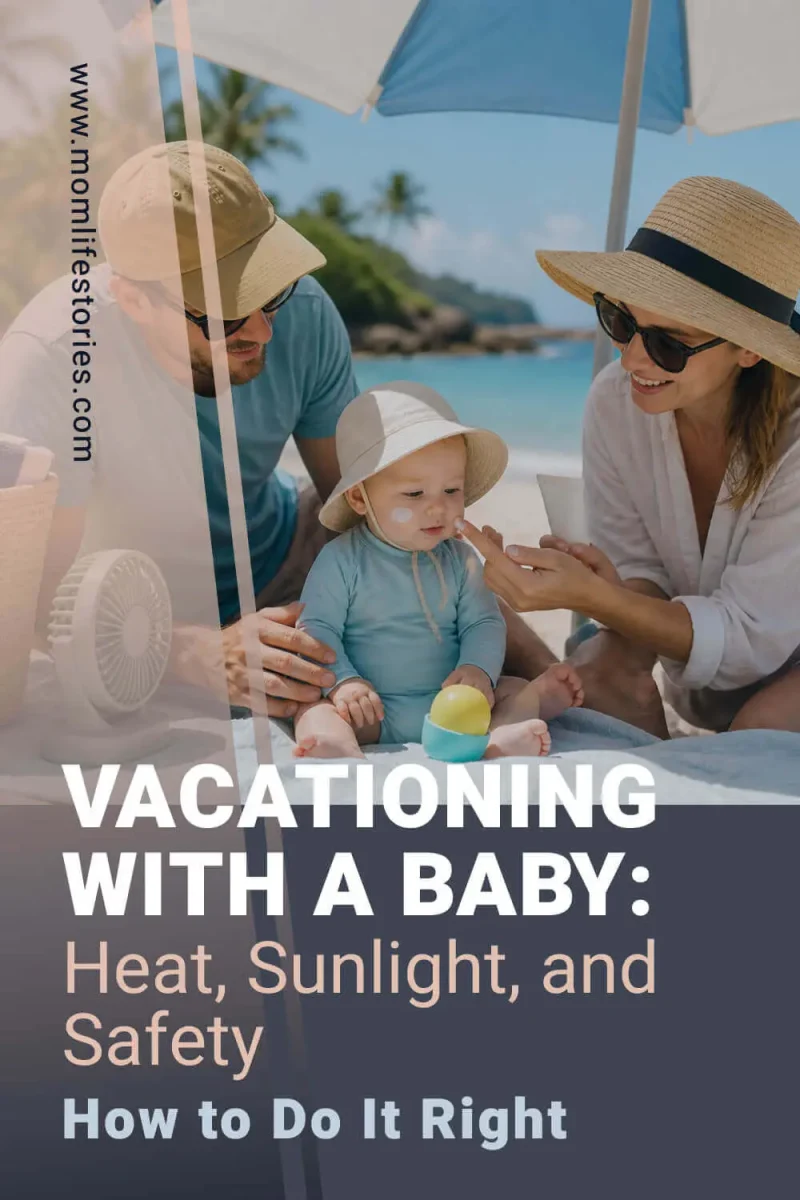
At the beach, UV exposure is even stronger because sunlight reflects off the water. That’s why shade should always be your first line of defense. A beach tent, umbrella, the cooling shade of a large tree, or UV-protective clothing offer far more reliable protection than extended sun exposure. Even in the shade, make sure your baby stays properly hydrated, and remember: a baby’s body responds to heat very differently than an adult’s.
If you’re planning beach time, choosing the pre- or post-season can be a safer option. In the end, the key is always the same: intentional timing, shade, and moderation.
👉 Before heading out, make sure your diaper bag is truly ready for summer adventures. In Diaper Bag Tips: The Best Organization Ideas for Stress-Free Outings, you’ll find smart packing ideas to help you stay calm, organized, and prepared — whether you’re planning a short walk or a full beach day.
What Does SPF Actually Mean?
SPF, or Sun Protection Factor, indicates how long sunscreen can help protect the skin from burning compared to unprotected skin. For example, if a baby’s skin would begin to redden after about 3 minutes without protection, an SPF 30 sunscreen could theoretically provide 30 times longer protection.
However, it’s important to remember that this is only a theoretical calculation. In real life, factors such as sweating, water exposure, skin sensitivity, and application thickness all influence how effective sunscreen truly is.
When choosing a sunscreen, it’s helpful to understand the difference between chemical and physical (mineral) filters. Chemical sunscreens are absorbed into the skin and absorb UV rays, while physical sunscreens sit on top of the skin and reflect them. For babies and young children, physical (mineral) protection is generally considered the safer option.
Avoid spray formulas, as children can inhale them. Choose products that are free from problematic ingredients and safe even if your baby puts their hands in their mouth.
Still, during vacationing with a baby, shade and proper coverage should always remain your primary protection. Sunscreen is a supplement — it should never replace intentional timing, protective clothing, and staying out of direct sun whenever possible.

Sunburn or Heat Exhaustion? How to Respond Quickly and Calmly
If your baby’s skin looks red, feels tight, or seems sensitive to the touch, don’t dismiss it. A baby’s skin is far more delicate than an adult’s, which means sunburn can develop faster and become more severe. For mild sunburn, cooling is the first step. Use a lukewarm (not ice-cold) compress or a short bath for 15–30 minutes to help calm the inflammation.
Afterward, apply a baby-safe, fast-absorbing soothing product such as one containing panthenol or aloe vera. Avoid heavy, oily creams, as they can trap heat in the skin. Hydration is essential. Offer frequent breastfeeding or fluids to prevent dehydration. If your baby seems unusually fussy or uncomfortable, consult your pediatrician about appropriate pain relief.
During recovery, keep the affected skin completely out of the sun. Loose, long-sleeved clothing can help protect sensitive areas. Do not rub or exfoliate the skin, and never pop any blisters that may form. If your baby appears lethargic, nauseous, vomiting, or unusually irritable, consider the possibility of heat exhaustion. Move them immediately to a cool, shaded area, encourage fluids, and avoid sudden extreme temperature changes.
Seek medical attention right away if your baby is under one year old, if the skin is blistered or severely red and painful, or if symptoms such as fever, chills, vomiting, or signs of dehydration occur. The younger the baby, the more vulnerable they are to heat. Prevention will always be safer than treatment.
Final Thoughts
Vacationing with a baby isn’t about giving everything up. It’s about intentionally planning your time together in a different rhythm than before. A rhythm that fully considers not only your own needs, but your baby’s as well.
When you pay attention to the heat, the sun, and proper protection, vacationing with a baby doesn’t have to feel overwhelming. Instead, it becomes the beginning of a beautiful shared memory — one built on care, awareness, and love.
👉If you’d like to walk this journey feeling more prepared, more confident, and a little less worried, visit the Little Lifesavers page and explore our free downloadable resources. They’ll help you stay organized, plan ahead, and create the kind of calm and clarity you need most right now.
👉 And if you’re looking for a place that brings all of this together — real motherhood stories, everyday struggles, and gentle support — you’ll always find it on MomLifeStories.