

Easier Labor? These Are the Labor Positions Doulas Swear By
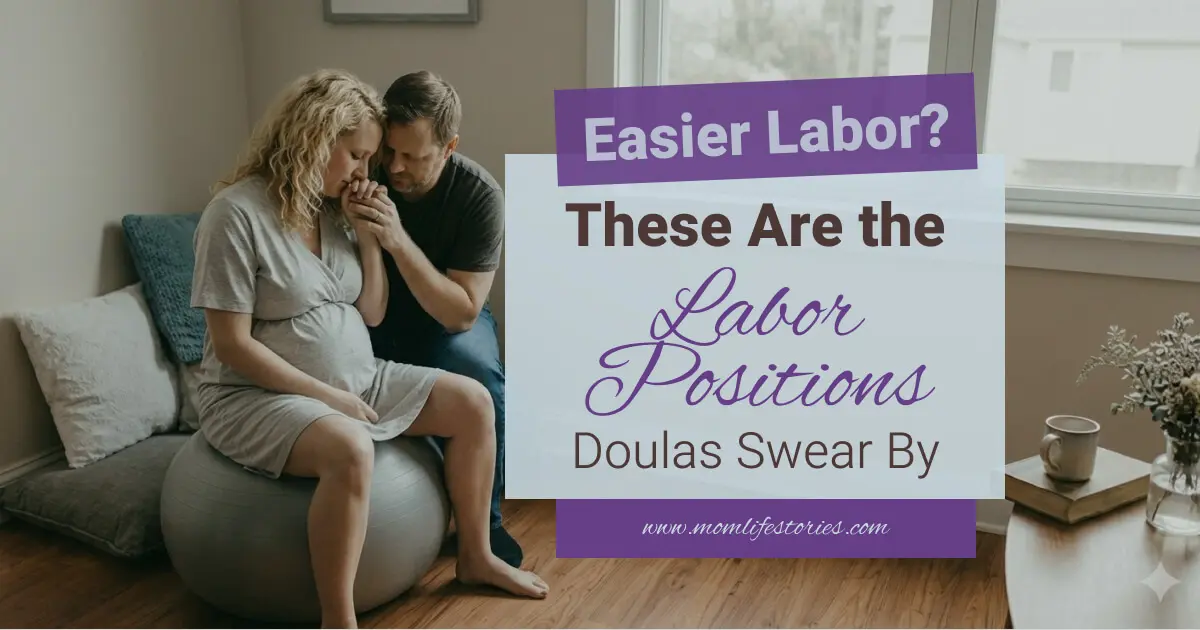
If you thought birth was all about lying on your back in a hospital bed, I don’t blame you — that’s exactly what most movies show. But in reality, labor is usually much more active, and thankfully, you have far more options than that. Labor positions can have a huge impact on how labor progresses, how intense contractions feel, and even how long labor lasts. That’s one reason modern maternity care guidelines encourage freedom of movement and position changes during labor whenever possible.
The truth is, lying flat on your back is actually one of the least effective positions for labor. Almost any other position can work better simply because gravity helps your body do what it was designed to do. When you stay upright, your baby can move down through the birth canal more easily, your pelvis can open more naturally, and your body can work more efficiently with contractions.
That’s why it’s worth learning about different labor positions before the big day arrives. Because when contractions are coming every few minutes, you probably won’t feel like researching what might actually help. So if you want to feel more prepared and confident about birth, come with me — I’ll show you the labor positions doulas swear by for a smoother, more manageable labor experience.
Movement and Upright Labor Positions — Let Gravity Work for You
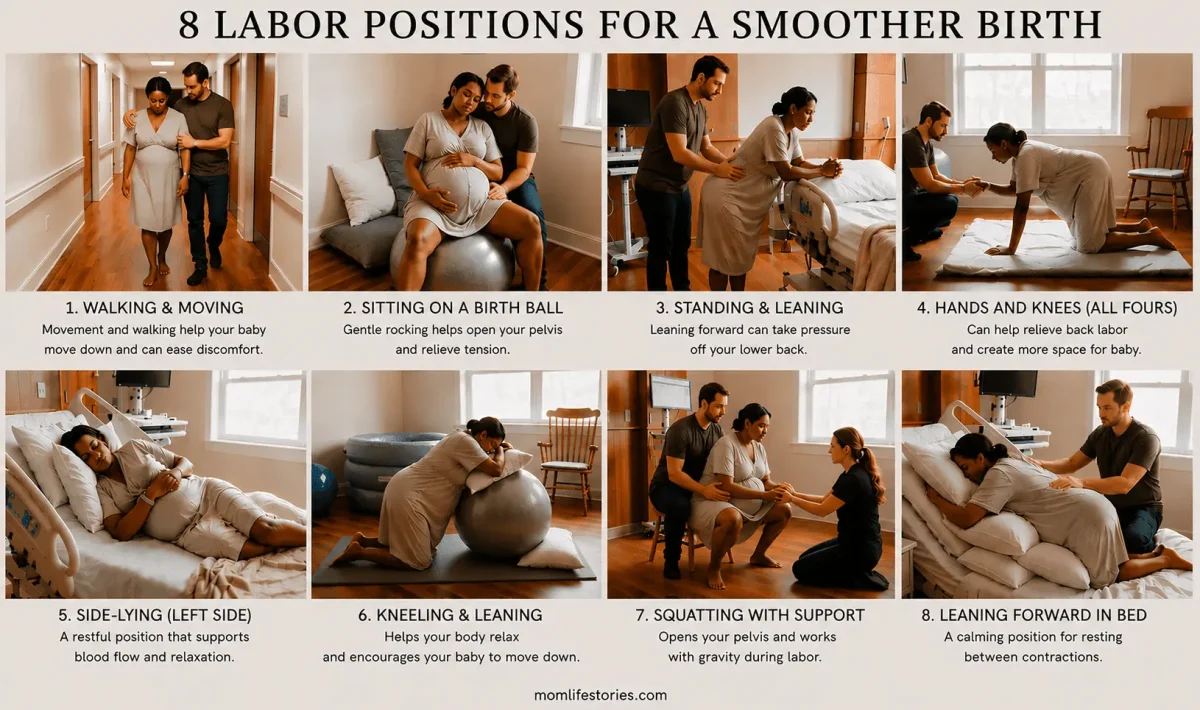
During early labor, one of the best things you can do is simply walk. According to doula Talena Cawthon, movement not only helps your body ease into labor, but the natural motion of your hips can also help guide your baby downward through the birth canal. So if you can, keep moving instead of heading straight for the bed the moment you arrive at the hospital.
Along with standing and walking, gentle swaying can also make a huge difference. Rocking back and forth or side to side helps keep the pelvis loose and mobile while encouraging your baby to move lower. During contractions, leaning against a wall, the bed, or your partner isn’t weakness — it’s smart body support.
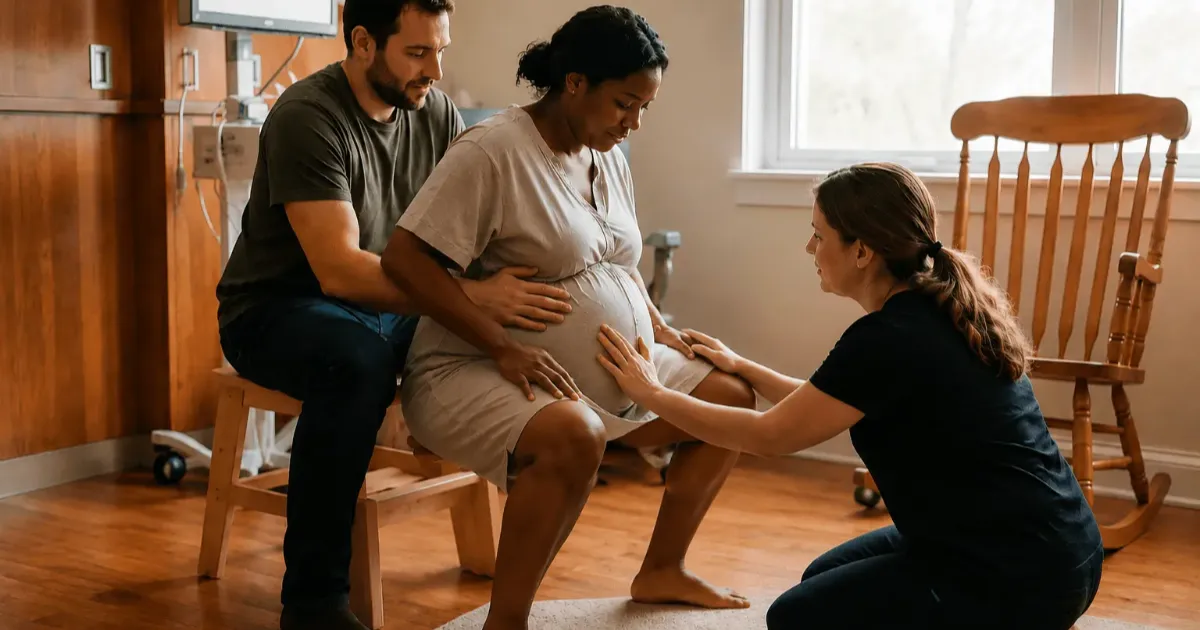
Squatting is a more powerful labor position that often becomes especially helpful later in labor or during pushing. Doula Samantha Greiner explains that squatting can help open the pelvis, increase pressure on the cervix to support dilation, and reduce strain on the lower back at the same time. And no — you don’t have to hold yourself there alone. You can use a support bar, birth partner, or anything stable nearby for balance and comfort.
Research also shows that upright labor positions — including standing, walking, squatting, and sitting — may shorten the first stage of labor by more than an hour on average. Women who spend part of labor upright are also less likely to need a C-section. Honestly, that’s a pretty convincing reason to keep moving.
👉 If you’d like to actually see how these labor positions work in real life, this video is worth watching. It gives a simple and easy-to-follow look at several upright and movement-based labor positions that may help reduce tension, support your baby’s descent, and work with your body instead of against it. 👉🎥 Labour Positions | Mater Mothers
Sometimes, simply seeing your options ahead of time can make labor feel far less overwhelming — because you’re not discovering these positions for the very first time during contractions.
Sitting and Birth Ball Positions — When Squatting Becomes Too Much
If squatting starts to feel too exhausting for your legs, sitting can be a much more comfortable option during labor. You can sit on the bed, lean into your partner’s arms, or — even better — use a birth ball for extra support and movement. According to doula Talena Cawthon, sitting on a birth ball can help your baby settle deeper into the pelvis, while gentle rocking or circular movements may encourage your baby to move downward more easily.
Sitting is also far less tiring than holding a squat for long periods, while still helping keep the pelvis open and flexible. And then there’s one labor position that might sound a little strange at first — but surprisingly, many moms swear by it: sitting on the toilet.
Yes, really. Cawthon explains that this position works similarly to squatting because gravity helps support your baby’s descent, while your body naturally relaxes more in this position. Sometimes the bathroom is simply the one place where your muscles stop trying so hard. So if this is the position that feels right during labor, trust your body. In the delivery room, nobody cares whether labor looks graceful — what matters is finding what genuinely helps you cope and feel supported.
👉If you’re fascinated by how technology is changing pregnancy and birth, this article is definitely worth reading. It explores how researchers are using data, AI, and predictive algorithms to better understand when labor may begin — and why the future of childbirth support could look very different from what we know today. 👉 Data-Driven Pregnancy – The Algorithm That Might Predict Labor It’s a fascinating look at the intersection of modern technology, pregnancy tracking, and the unpredictable reality of labor.

Hands-and-Knees Positions and Belly Support — When Your Body Needs More Space
The hands-and-knees position is a favorite for many moms during labor — and for good reason. This position can help take pressure off your back while creating more space for your baby to move, rotate, and settle into the pelvis more comfortably.
While you’re in this position, your partner or doula can apply gentle pressure to your hips or lower back, which may bring significant relief from back labor and tension. This simple technique, often called counterpressure, can feel incredibly comforting during contractions.
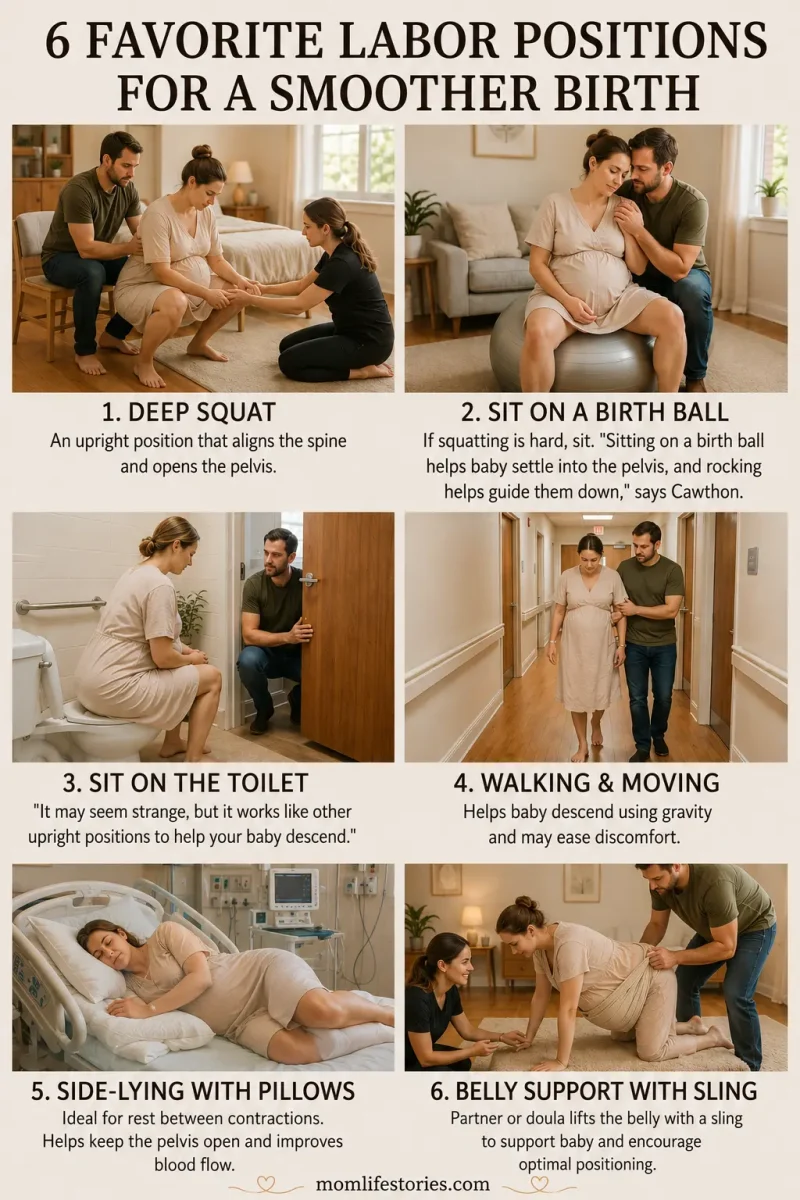
Another helpful variation is using a scarf or rebozo for belly support.
In this technique, your partner or doula stands behind you and gently lifts and supports your belly with a cloth or wrap.
This may help encourage better pelvic movement and support your baby in finding a more optimal position for birth.
And yes — sometimes labor can suddenly slow down or seem to stall completely.
It’s actually very common, even though it can feel frustrating in the moment.
These positions and movements may help encourage your baby to shift slightly, find a better angle, and help contractions become more effective again.
Side-Lying Positions — When Your Body Needs Rest
Side-lying is a calmer, more restful labor position that can be especially helpful when you’re completely exhausted. If standing, squatting, or sitting feels impossible at that point, lying on your side is still usually much more beneficial than lying flat on your back.
This position places less pressure on major blood vessels, may help keep the pelvis open, and creates more room for your baby to continue moving downward. It can also be useful if your baby is in a less ideal position because it may encourage gentle rotation and repositioning.
One small but important tip: if you’re laboring on your side, try switching sides about every 30 minutes. And side-lying isn’t just for resting — it can also work surprisingly well as a pushing position, especially if labor is moving very quickly.
👉Not sure whether those cramps are just practice contractions or the real thing? This article walks you through the most common signs of true labor, how contractions typically change over time, and when it’s actually time to grab the hospital bag and go. 👉 Oh My God, Are These Labor Contractions? – Signs It’s Really Time to Go
Because during late pregnancy, sometimes the hardest part is figuring out whether your body is really preparing for birth — or just keeping you guessing again.

Which Labor Position Is the Best?
The honest answer? The one that feels best for you in that moment. Research shows there’s no single “perfect” labor position that works for every mom. What feels incredibly relieving for one person may feel uncomfortable for someone else — and that’s completely normal. In fact, switching between labor positions is usually a natural and important part of the labor process.
You may feel like walking during early labor, prefer sitting on a birth ball later on, and eventually find yourself naturally moving into a hands-and-knees or squatting position during pushing. Your body will constantly give you clues about what it needs — and it’s worth listening to those instincts.
At the same time, your doctor or midwife will also be monitoring your baby’s heart rate. Sometimes they may ask you to change positions if a certain movement affects your baby’s response. That doesn’t mean you’re doing anything wrong — it’s simply part of adapting to labor as it unfolds. One position that’s usually best to avoid for long periods is lying flat on your back.
Not only is it often less effective for labor, but in some cases it may also reduce blood flow to your baby. The most important thing is not getting stuck in one position. Move around, experiment, lean on your partner or doula for support, and allow yourself to respond naturally to what your body is asking for.
Maybe you’ll feel best on a birth ball. Maybe on your hands and knees. Maybe even sitting on the toilet. And honestly? All of that is completely okay. Your body knows far more about birth than you probably realize.
👉If you’d like to walk this journey feeling more prepared, more confident, and a little less worried, visit the Little Lifesavers page and explore our free downloadable resources. They’ll help you stay organized, plan ahead, and create the kind of calm and clarity you need most right now.
👉And if birth stories, real experiences, and the emotional journey of childbirth matter to you, you’ll find more honest reflections and preparation in our Childbirth section.