

Baby Care Without Panic: Turning Chaos Into a Loving Routine

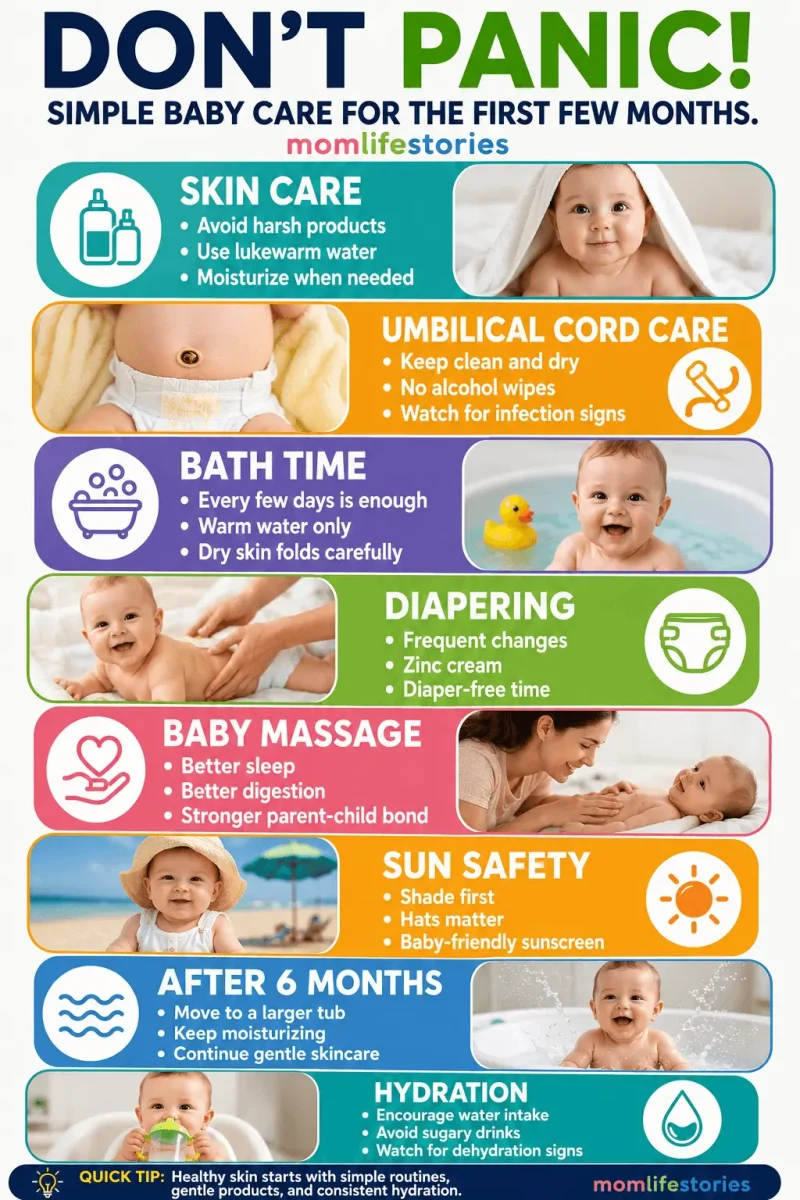
One of the most important things to understand about baby care is that a newborn’s skin is far more sensitive than it looks. It’s thinner, more delicate, and reacts much faster to its environment than adult skin — whether it’s irritating ingredients, bacteria, or even a new baby wipe.
During the first few weeks, dry or peeling skin, milia (small white or yellow cysts on the skin), cradle cap (yellowish, oily or dry flakes on the scalp), and diaper rash are all completely normal. A newborn’s skin still needs time to strengthen, and its protective barrier takes years to fully develop.
That’s why, in the beginning, the simplest things often work best. During the first weeks, lukewarm water and gentle care are usually more than enough. The vernix present at birth acts as a natural protective layer for your baby’s skin, so there’s no need to completely wash it away. Later on, you can gradually introduce mild, fragrance-free products, but when it comes to caring for newborn skin, you truly need very little.
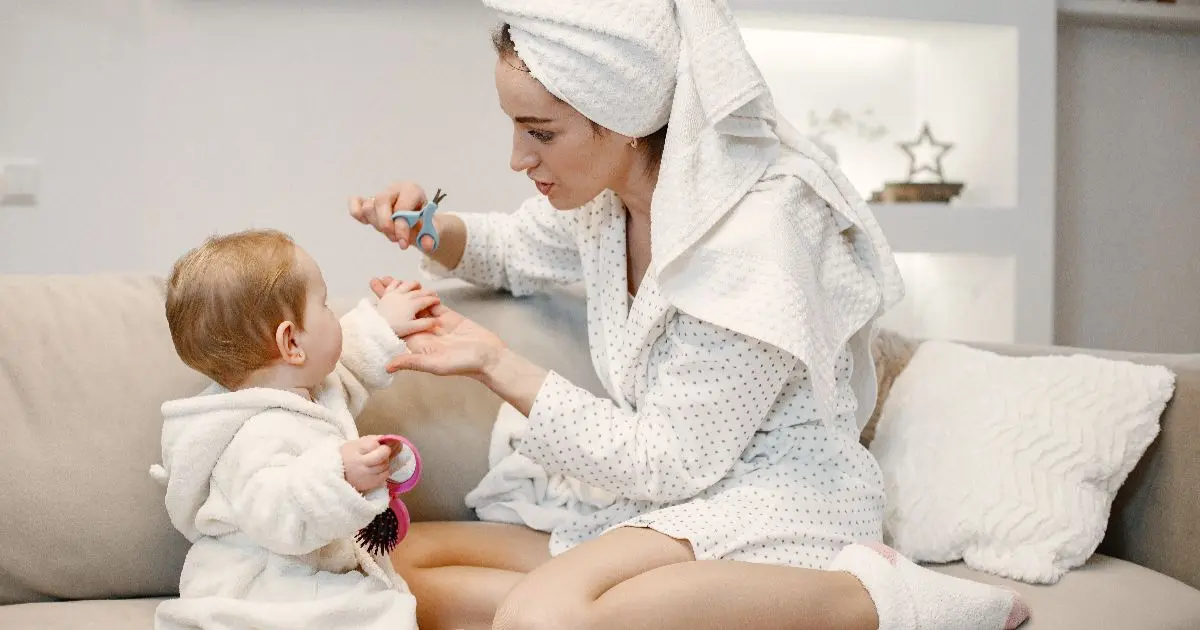
Bath Time and Diaper Changes – The Basics of Daily Baby Care
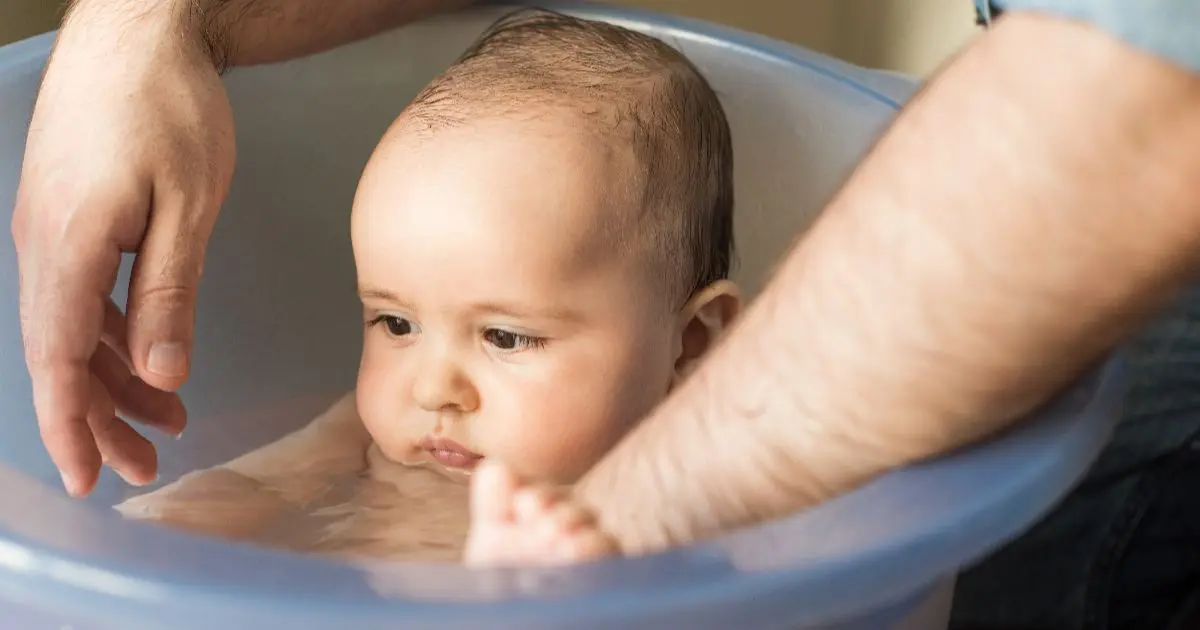
A daily baby care routine usually revolves around two main things: bath time and diaper changes. Both may seem simple at first, but they often bring plenty of questions during those early weeks. When it comes to bath time, the most important rule is that you should never leave your baby alone in the water — not even for a second.
The bath water should be shallow, about two centimeters deep, and you should always check the temperature before starting. It also helps to prepare everything in advance: baby wash, baby shampoo, a soft towel, a clean diaper, and fresh clothes. After bath time, moisturize your baby’s skin while it’s still slightly damp, because this is when hydration absorbs best. Baby powder and talc are generally not recommended.
The diaper area is especially sensitive because it’s constantly exposed to moisture, friction, and pressure. About one in four babies develops diaper rash, which may appear as red spots or larger irritated areas. To help prevent it, frequent diaper changes are important, along with a thick layer of zinc-based barrier cream and as much diaper-free time as possible. If the rash doesn’t improve or starts getting worse, it’s important to contact your pediatrician.

Baby Massage – The Overlooked Part of Baby Care
Baby massage is often the most overlooked part of baby care, even though it can have many benefits. It may help support circulation, digestion, calmer sleep, and even strengthen the bond between you and your baby.
Use gentle, circular motions and, if possible, a natural oil. Sweet almond oil, for example, is rich in proteins, minerals, and vitamins A, B, and E, while still being gentle enough for even the most sensitive baby skin.
👉If your baby struggles with gas pain, fussiness, or restless sleep, baby massage may help more than you think. Discover gentle techniques that can calm your baby, support digestion, and make bedtime feel a little easier for both of you in our article: How Can Baby Massage Help Relieve Gas Pain and Restless Sleep?

Which Products Should You Choose — and Which Ones Should You Avoid?
This is usually the point where many parents feel overwhelmed standing in front of endless shelves full of baby products. Choosing the right baby care products isn’t always easy, especially when you’re new to it and everyone seems to have their own advice. The basic rule, however, is simple: avoid products containing fragrances, alcohol, mineral oils, paraffins, silicones, and microplastics.
A baby’s skin has a different pH level than adult skin, which means it needs products specifically designed for delicate newborn skin. Moisturizers containing ceramides can help strengthen the skin barrier, so these are worth looking for. If possible, choose organic, chemical-free, or pharmacy-recommended products.
A baby’s small body cannot process and eliminate chemicals as effectively as an adult’s body can, which means the same ingredients may have a much stronger effect on newborn skin. Cold-pressed plant oils are often a good option because they retain their natural nourishing properties. If you ever feel unsure about a product, your pediatrician or dermatologist is always a good place to start.
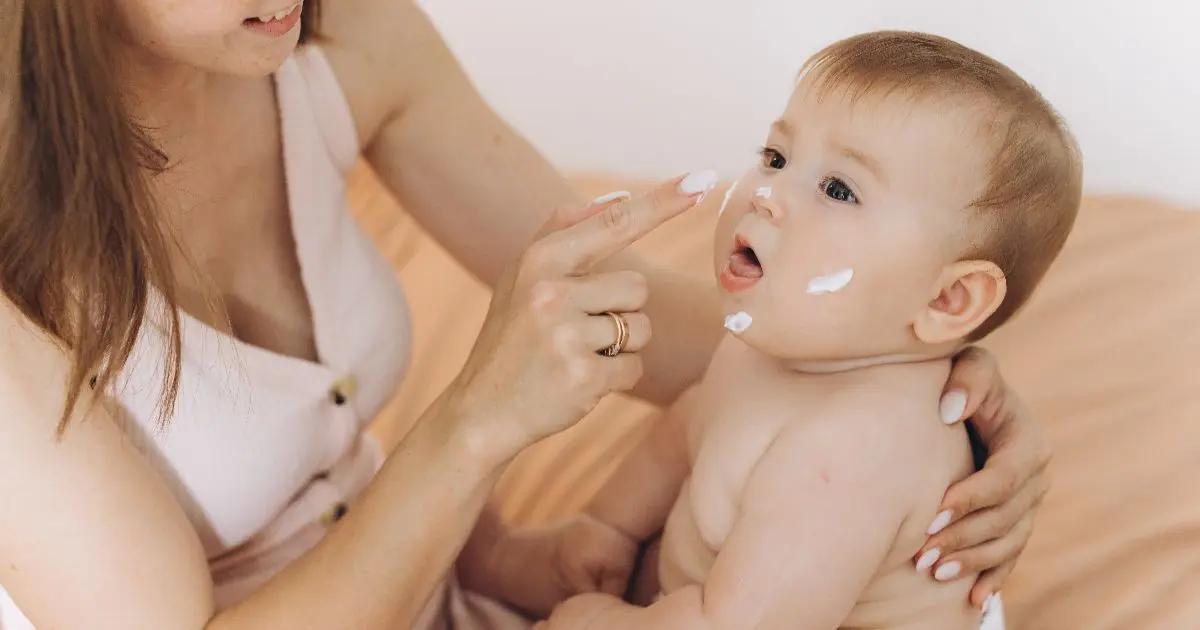
Feeding, Sleep, and the Real Rhythm of Everyday Life
Baby care is about much more than skincare — feeding and sleep are just as important parts of daily life. And honestly, these are often the areas where the gap between expectations and reality feels the biggest.
For a newborn, breast milk is considered the ideal source of nutrition, but if breastfeeding doesn’t work out or isn’t possible for any reason, a formula-fed baby can still grow and thrive perfectly well. The most important thing is that your baby is well-fed and lovingly cared for. No matter which feeding method you choose, it’s always a good idea to burp your baby after feeding.
👉 If your baby is getting closer to the stage of starting solids and you’d like to know when, what, and how to introduce new foods, make sure to read this detailed guide as well: Introducing Solids Step by Step: What, When, and How to Feed Your Baby.

Sleep can easily become one of the biggest challenges during the first few months. Newborns usually sleep in 2–4 hour cycles and, at first, they don’t understand the difference between day and night. You can gradually help with this by keeping nighttime care quiet and calm — with dim lights and minimal interaction — while daytime is filled with more light, talking, and active time together.
A real daily routine usually starts to develop around three to four months of age. Until then, the goal isn’t a perfect schedule — it’s simply creating a few comforting, predictable moments throughout the day. This might be an evening bath that signals bedtime is approaching, or a calm morning feeding followed by quiet playtime to help your baby begin distinguishing daytime from nighttime.
Sun Protection and Hydration — Because It’s Not Just a Summer Concern
Proper sun protection is an important part of baby care — even if your baby spends very little time outdoors at first. A baby’s skin is especially sensitive to sunlight, which means it can burn or become damaged much more easily. Early UV exposure can also affect skin health later in life.
That’s why it’s worth using a mineral sunscreen specifically made for babies and making sure your little one spends as much time in the shade as possible. During summer, a hat should always be part of the routine, and sunscreen should be reapplied every two hours — or sooner if it gets rubbed or washed off.
What worked during the first few weeks may look completely different a few months later — and that’s completely normal. What matters most is paying attention to your baby, responding to their needs, and slowly learning this new chapter of life together, day by day.
👉And if you’re looking for gentle, real-life guidance beyond milestones — support that sees both your baby and you — you’ll find it on MomLifeStories.
👉If you’d like to walk this journey feeling more prepared, more confident, and a little less worried, visit the Little Lifesavers page and explore our free downloadable resources. They’ll help you stay organized, plan ahead, and create the kind of calm and clarity you need most right now.