

What to Play With Your Baby (3–12 Months): Simple Developmental Activities
As your baby grows, you may find yourself wondering more and more often: what should you play with your baby now that they’re no longer just lying there observing, but actively engaging with the world around them?
Around three months, everything shifts. They’re more alert. More curious. More responsive. And suddenly you realize — this stage isn’t just about feeding and naps anymore. It’s about connection. Shared attention. The small back-and-forth moments that build your bond. It’s completely natural to start searching for ideas about what to play with your baby in a way that does more than pass the time.
You want something meaningful. Something that gently supports their development while strengthening your relationship at the same time. Here’s the most important thing to remember: you don’t need special equipment or expensive toys. In fact, most of the time, you are the most powerful “toy” your baby has. Your voice. Your facial expressions. Your touch. Your presence. These are what truly stimulate their brain and nurture emotional security.
In this article, you’ll find simple, playful ideas designed to turn everyday moments into opportunities for connection, laughter, and meaningful growth — without pressure, without perfection, just real interaction.
3–6 Months: Movement, Rhythm, and First Cause-and-Effect Discoveries
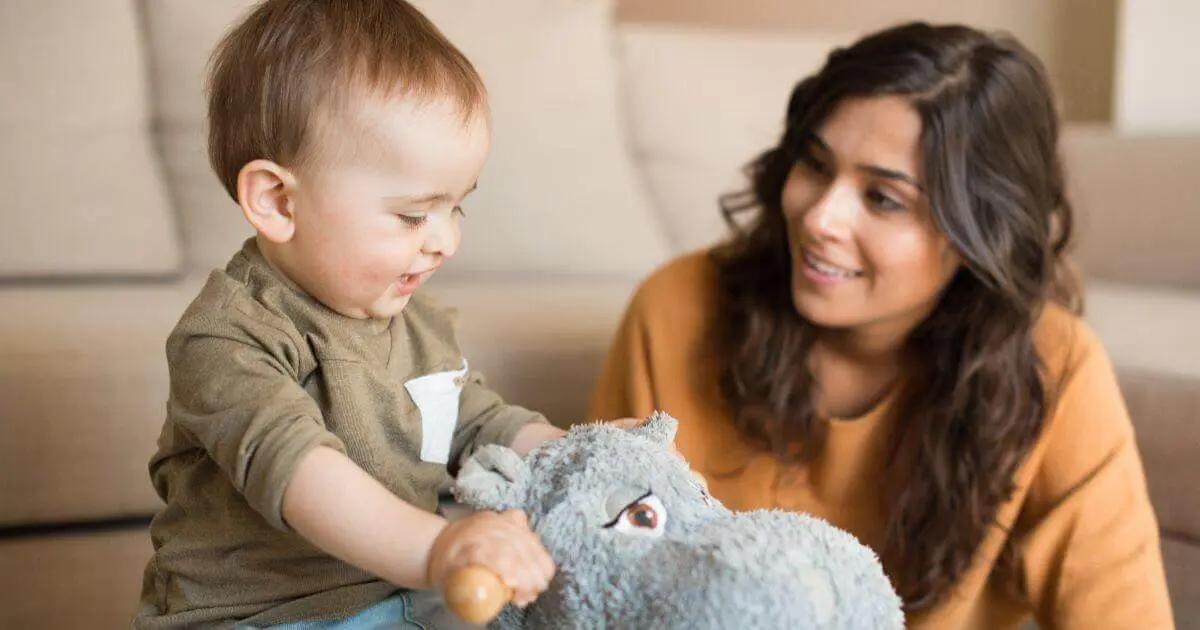
During this stage, your baby begins moving their hands more intentionally, holding their head more steadily, and truly enjoying being upright in your arms. Suddenly, the world looks different — higher, wider, more exciting. And that shift is a big deal. When you turn on music and gently sway, bend your knees, or slowly turn while holding your baby, something simple transforms into something powerful.
What feels like a little living-room dance to you is actually balance practice, sensory stimulation, and bonding all at once. While you move, your baby works to stabilize their body, track movement, and take in new details around the room. Bath time becomes another beautiful learning moment. As your baby kicks and splashes, they eventually realize something important: their movement creates the waves.
These early cause-and-effect discoveries lay the groundwork for problem-solving later on. (Of course, bath time always requires constant supervision.) As head control strengthens, you can gently place your baby tummy-down on a partially inflated exercise ball or a firm cylindrical pillow and slowly roll them forward and back. This simple activity supports upper-body strength while the rhythmic motion often feels deeply soothing.
At this age, the key takeaway is this: ordinary moments become developmental experiences when you’re fully present. You don’t need complicated activities — just movement, rhythm, and connection.
3 Months to 1 Year: Peekaboo, Light Play, and Discovering Object Permanence
During this stage, games of disappearing and reappearing become truly fascinating. When you duck behind the crib and pop back up with a smile, what seems like a simple game of peekaboo is actually much more than laughter for your baby. It’s learning in action. They’re beginning to understand something important: just because they can’t see you doesn’t mean you’re gone. This early understanding of object permanence lays the foundation for emotional security and cognitive growth.
As your baby grows, they’ll start following your movements with their eyes — and even anticipating the moment you reappear. That tiny pause before you pop back up is filled with excitement and expectation. Adding new facial expressions, playful sounds, or exaggerated reactions doesn’t just make it fun — it strengthens your connection and builds back-and-forth interaction.
Evening light play offers another gentle but powerful experience. Slowly moving a flashlight across the wall while softly talking or telling a short story can be surprisingly calming. At the same time, your baby’s visual tracking skills and attention are developing, all while they feel safe and secure in your arms.
If you find yourself wondering in the evening what to play with your baby without overstimulating them, these slower, quieter activities are true treasures. Sometimes the simplest games create the deepest developmental impact.
6–8 Months: Communication, Knocking Things Down, and Exploring Sound
Around six months, the real wiggle-and-move stage begins. Your baby starts rolling more confidently, rocking on hands and knees, and using their body with growing intention. At the same time, their will becomes stronger. They often know exactly what they want — they just don’t yet have the words to say it. This is where simple word-and-gesture pairings can make a big difference.
When you consistently say “Are you hungry?” or “Are you sleepy?” while using the same matching gesture, your baby slowly begins to connect the movement with the meaning. The goal isn’t perfect imitation. The goal is to create a shared, playful “language” that reduces frustration and strengthens your bond.
A small photo album can also be surprisingly powerful at this age. Familiar faces, names, smiles — as your baby flips through the pages, they’re not only practicing fine motor skills, they’re also strengthening recognition and memory. And that sparkle in their eyes when they see someone they know? That’s connection forming in real time. And yes — at this stage, knocking things down is learning.
When your baby eagerly topples a carefully built block tower, it’s not just noisy fun. It’s hand-eye coordination and cause-and-effect exploration in action. They’re discovering that their movement creates a visible outcome. Sound play becomes especially exciting, too. Dragging a spoon across a pot, crumpling parchment paper, or blowing bubbles into water all teach the same lesson: movement creates sound.
If you ever run out of ideas for what to play with your baby, just look around your kitchen. Sometimes the simplest household objects offer the richest learning experiences.
👉 If you’re starting to notice your baby’s strong will emerging during this stage — and you sometimes find it challenging to respond calmly — you may also want to read Gentle Parenting in Real Life: 5 Tips That Actually Work. Inside, you’ll find practical, real-life strategies for setting healthy boundaries while still preserving connection and maintaining a peaceful atmosphere at home.

8–10 Months: Inside and Outside, Hiding Games, and Cozy Spaces
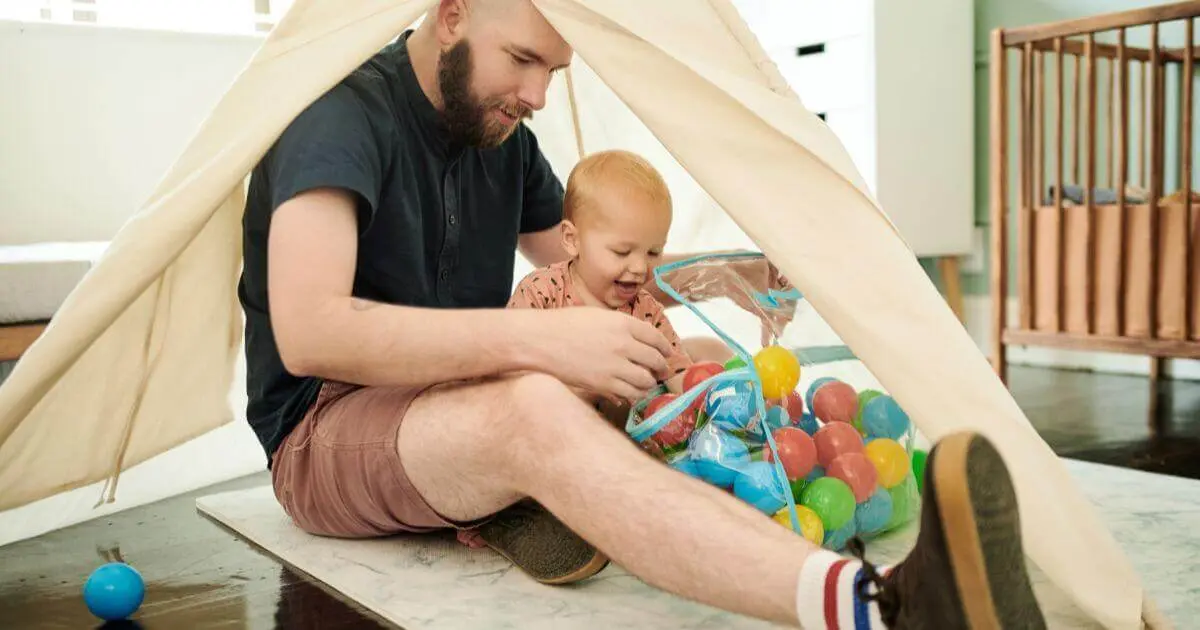
Around nine months, your baby is sitting more steadily, crawling with confidence, and reaching for everything within sight. This is when the classic “Where did it go?” phase begins — and hiding and finding becomes one of the most powerful ways they learn. With something as simple as a cardboard box, a blanket, and a few toys, you can create an entire world for them.
Sitting inside, peeking out, cutting a small “door” or “window” — these playful moments aren’t just cute. They’re helping your baby understand space, boundaries, and the idea of inside and outside — all within a safe, cozy environment. Hiding a toy in the sandbox and guiding them as they dig it up taps directly into that growing curiosity. At first, they need your help. Soon, they begin searching on their own.
That shift — from guided discovery to independent exploration — is real developmental progress happening right in front of you. Even bath time can turn into meaningful learning. A simple squeeze toy and the question, “Where’s your tummy?” followed by a gentle spray blends touch, language, and cause-and-effect into one playful interaction. Every small action becomes a brain-building moment.
And a blanket fort made from chairs transforms story time completely. Inside a cozy nook, everything feels different. More focused. More magical. Environment shapes experience — and even a tiny change can deepen connection. If you ever wonder what to play with your baby during the day, remember this: you don’t need elaborate setups. Simple spaces that invite curiosity and interaction often create the richest learning experiences.
11–12 Months: Imitation, Caregiving, and Busy Little Hands
Around one year old, your baby becomes a true imitator. They carefully watch what you do and want to try it themselves. This is the stage where everyday routines turn into meaningful learning opportunities. Diapering a doll or stuffed animal playfully introduces the idea of caregiving while also strengthening fine motor skills. Water “painting” outside on the patio or in the yard offers creative exploration without the mess.

And if you’re comfortable with a little extra cleanup, there are baby-safe paints available that are non-toxic if accidentally tasted. Threading large-holed cereal pieces or chunky beads onto a string supports the development of the pincer grasp and hand-eye coordination — always with close supervision, of course.
A simple wrapping game, where a bath toy is hidden inside a washcloth and given as a “gift,” teaches an important lesson: sometimes the unwrapping is just as exciting as what’s inside.
At this age, your baby’s growth feels especially visible. Skills seem to change almost weekly. Still, it’s important to remember that every child develops at their own pace. If something doesn’t spark interest today, it may become a favorite in just a few weeks.
And whenever you start wondering what to play with your baby, come back to this truth: it’s not about the perfect activity. It’s about connection. Your attention, your shared laughter, and the time you spend together are what truly matter most.
👉If you’d like to walk this journey feeling more prepared, more confident, and a little less worried, visit the Little Lifesavers page and explore our free downloadable resources. They’ll help you stay organized, plan ahead, and create the kind of calm and clarity you need most right now.
👉 And if you’re looking for a place that brings all of this together — real motherhood stories, everyday struggles, and gentle support — you’ll always find it on MomLifeStories.