

Breastfeeding Step by Step: How Confidence Grows from Uncertainty

Breastfeeding is one of the most talked-about topics during pregnancy and in the first months with your baby — and for good reason. Almost everyone has something to say about it: from your mom to your grandmother, each adds their own experience. By the time your baby arrives, you may find yourself surrounded by so many conflicting opinions that you’re no longer sure what to believe.
What often sits underneath all of this is something many mothers quietly experience: too much information can feel more overwhelming than helpful.
The reassuring part is that most mothers are able to breastfeed. And while it doesn’t always start smoothly, breastfeeding isn’t about getting it perfect from the beginning — it’s something you learn. With time, practice, and the right support, it becomes more natural — and little by little, your confidence grows with it.

What to Know About Breastfeeding Before Your Baby Arrives
Before your baby is born, it’s worth taking a moment to think a few things through and prepare — not perfectly, just intentionally. Many people assume that breastfeeding will “just happen,” that instinct will take over and everything will fall into place. There’s some truth in that — but the reality is a bit more nuanced. If you’re still pregnant, this is the best time to start getting familiar with it. Not to memorize everything, but to make sure you don’t feel completely lost in those first few days.
Your doctor is there to support you throughout your pregnancy, and you can turn to them with any questions. If you want to go deeper specifically with breastfeeding, you can also reach out to a lactation consultant — even before birth. You don’t have to wait for a problem to arise. It’s completely okay to go “just to learn” and get a clearer picture of what to expect.
It also helps to think through a few practical things in advance. Consider getting a supportive pillow for your back and arms, and think about where you’ll likely breastfeed. You don’t need a dedicated nursing chair, but having a comfortable, calm corner where everything is within reach can make a real difference. Small essentials — like a nursing bra or even a breast pump — can also make everyday life easier, and these are worth preparing ahead of time.

The First Days: Colostrum, the Hospital, and the Power of Patience
Your body has already been preparing for milk production since the second half of pregnancy, so in the first days after birth, colostrum is already there. This thick, yellowish early milk is like your baby’s first layer of protection — rich in immune-boosting components and incredibly valuable for a newborn. That’s why it’s worth putting your baby to the breast as soon as possible — the earlier they receive colostrum, the better.
The days spent in the hospital can gently support this beginning. You’re surrounded by professionals who help mothers with these first steps every day, including those first attempts at latching. Don’t hesitate to ask questions or ask for help — there’s no need to hold back. Breastfeeding isn’t something that has to be perfect from the start — it’s something both you and your baby learn together.
👉You may also notice that your baby becomes fussy or cries more often during these early days — which is completely natural as they adjust to the outside world. In moments like these, it can feel overwhelming to figure out what your baby needs. If you find yourself unsure how to respond, you might find gentle guidance here: 👉Soothing a Crying Baby: 10 Ways to Try When Nothing Seems to Work

Breastfeeding Technique: Positioning and Latch
One of the most important technical keys to successful breastfeeding is a proper latch. If the latch isn’t right, the whole process can become painful — and that’s an important signal, because with the right technique, breastfeeding shouldn’t hurt.
In practice, latching looks like this: gently touch your nipple to your baby’s mouth to trigger the rooting reflex — your baby will turn toward you and begin to open their mouth. When their mouth is wide open, bring them close and make sure they take in not just the nipple, but a large part of the areola as well. When the latch is correct, your baby’s nose will rest softly against your breast. If they latch onto only the nipple, it will likely be painful for you and less effective for your baby.
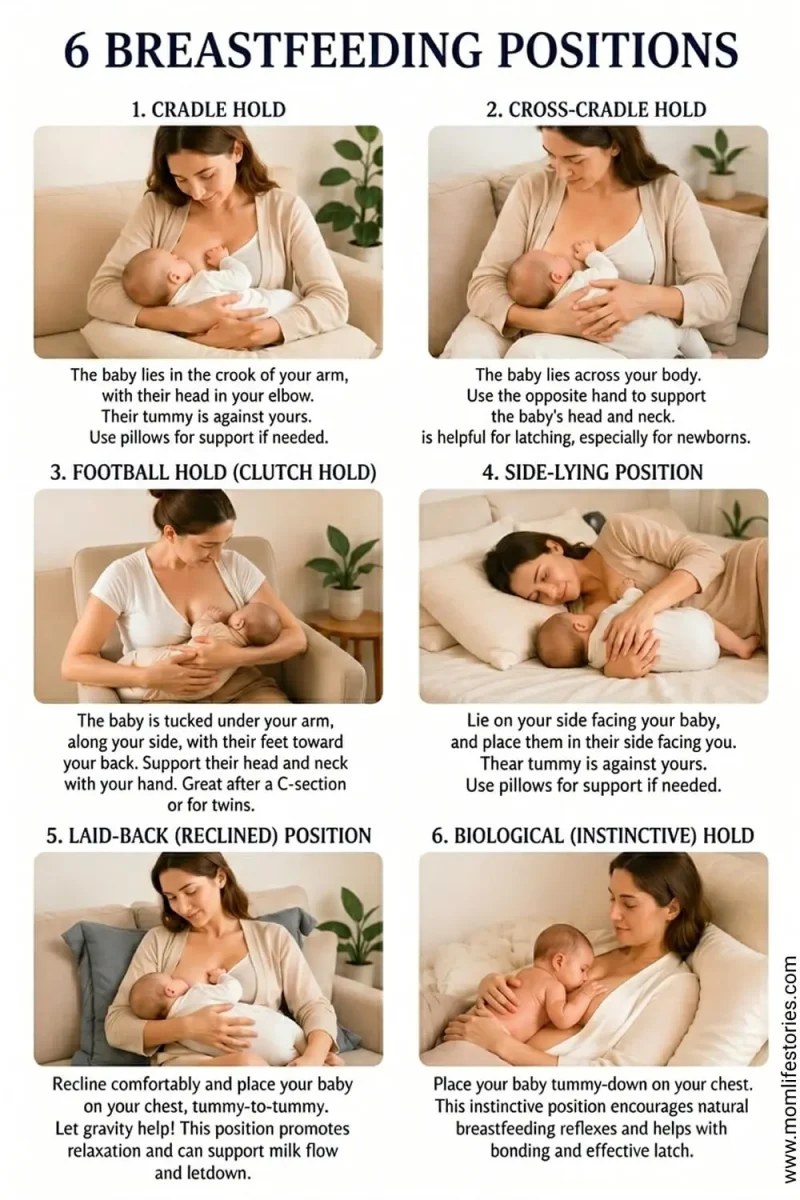
There are many different breastfeeding positions, and it’s completely normal to try a few before finding what works best. The cradle hold is the most common, but many mothers find the cross-cradle hold or the football hold easier in the beginning, as they allow better control of the baby’s head. If you’ve had a C-section, a side-lying position can help reduce pressure on your body. And if your baby tends to fall asleep while feeding, an upright position can help — it’s less sleep-inducing than lying down.
👉 Still unsure if you’re breastfeeding the right way? Here you can watch step by step how to help your baby latch properly, which feeding positions may feel more comfortable, and how to tell if your breastfeeding technique is truly effective — and not painful. In the first weeks, this can be a huge help.
Follow Your Baby’s Lead: Why On-Demand Breastfeeding Works Better
On-demand breastfeeding is simple in principle: your baby feeds when they need to, and for as long as they need to. It’s not about the clock — it’s about your baby’s cues. This can feel overwhelming at first, but it plays a key role in milk production — the more your baby feeds, the more milk your body produces.
To make this rhythm easier, it helps to notice early hunger cues. Lip smacking, rooting, bringing hands to the mouth, or turning the head are all signs your baby is ready to feed. If you respond at this stage, breastfeeding usually feels much calmer and easier. Waiting until your baby is crying often makes things harder — a frustrated baby needs to settle first before they can latch effectively.
From time to time, you’ll notice periods known as growth spurts — typically around 3 weeks, 6 weeks, 3 months, and 6 months — when your baby suddenly wants to feed much more often. This can feel alarming, and many mothers worry they don’t have enough milk. But in most cases, the opposite is true: frequent feeding is your baby’s way of signaling your body to produce more milk. Within a few days, your body usually adjusts and finds a new balance.
👉As your baby grows, you may start to notice new patterns behind the fussiness — not just hunger, but discomfort too. Teething often brings extra restlessness, crying, and changes in feeding behavior, which can feel confusing in the moment. If you’re trying to figure out what’s behind those unsettled periods, you might find this helpful👉 Baby Teething: Symptoms, Pain, and What Really Helps

Breastfeeding in Everyday Life: Nutrition, Hydration, and What Truly Matters
There’s no need for a strict or special diet while breastfeeding. What matters most is eating a balanced, varied diet — choosing foods rich in fiber and vitamins, while limiting excess sugar and highly processed meals. If you notice that certain foods seem to make both you and your baby more bloated or unsettled, it can help to temporarily remove them and observe any changes.
Hydration, however, is something to pay close attention to. It’s completely normal to feel thirstier while breastfeeding, so keep water within reach at all times and drink regularly. It’s best to limit caffeine and overly sugary drinks. Be cautious with so-called “milk-boosting” teas and supplements — they are not magic solutions, and since they often contain herbs, they can pass into breast milk. Always check with a professional before using them.
👉 If your baby’s fussiness or crying feels like more than just hunger, you might find support here:
Infant Colic – How to Soothe a Crying Baby and Protect Your Sanity
Vitamin intake is also an important part of this stage. Your body continuously provides nutrients to your baby through breast milk, so without proper support, deficiencies can develop over time. It’s a good idea to continue taking your prenatal vitamins or switch to one designed for breastfeeding — a healthcare professional can help guide you.
There may also be times when you need to pump — for example, if you’re returning to work or temporarily unable to breastfeed. In these situations, a good-quality, preferably double electric breast pump can make a significant difference.
Expressed milk can be stored in breast milk bags or sterilized containers, both in the refrigerator and freezer. Make sure to check safe storage guidelines in advance, so none of this valuable milk goes to waste.
Breastfeeding doesn’t fall into place overnight — it’s something you and your baby learn together, step by step.
👉 If you’d like a little more guidance for those early days, you can explore our First Weeks Breastfeeding Guide on the Little Lifesavers page — a gentle, step-by-step resource designed to help you understand what’s happening and feel more confident as you go.
👉If you’d like to walk this journey feeling more prepared, more confident, and a little less worried, visit the Little Lifesavers page and explore our free downloadable resources. They’ll help you stay organized, plan ahead, and create the kind of calm and clarity you need most right now.