

The Stages of Labor: What Really Happens During Labor and Birth?

As your due date gets closer, it’s completely natural to wonder what will happen in your body, what to expect during labor, and how the entire process of birth actually unfolds. The stages of labor are part of a natural process in which your body and your baby work together in remarkable harmony to finally meet face to face.
Yet when we read about childbirth, we often come across short explanations or medical terminology that can feel distant from the real experience. The reality, however, is far more complex—and far more human. The stages of labor don’t follow a perfectly straight line. Instead, they’re more like a long journey, with each stage bringing its own challenges, emotions, and physical changes.
In my own experience, learning about the labor process was incredibly reassuring. Not because it made labor easier, but because understanding what was happening helped me feel more prepared and less like I was simply being carried along by events. When you know what your body is doing and why, it becomes easier to trust the process. So come along, and let’s take a closer look at what really happens during this extraordinary journey.

When Your Cervix Starts Getting Ready for Labor
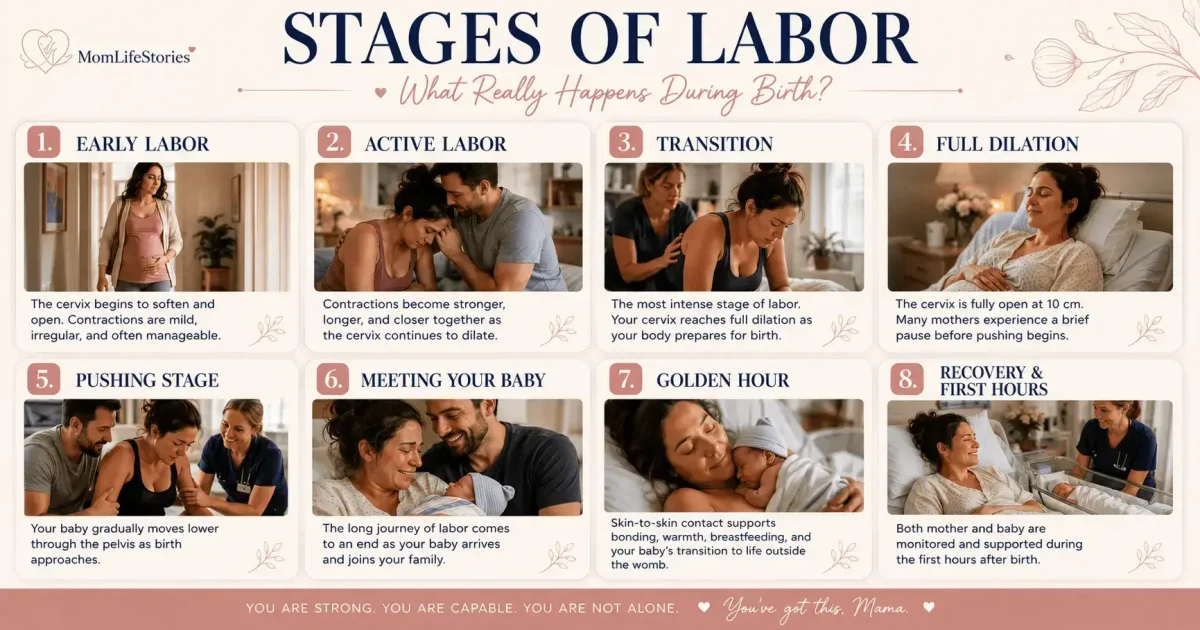
Throughout pregnancy, your cervix stays firm and closed, while the mucus plug provides an extra layer of protection for your baby. As labor approaches, however, your body gradually begins preparing for birth. The cervix softens, shortens, and slowly starts to open. This doesn’t happen all at once —it’s a gradual process that helps prepare your body for your baby’s arrival.
Of all the stages of labor, this is the first and often the longest: the dilation stage. It can be divided into three distinct phases, each bringing its own physical sensations and emotional experiences. I remember during my first labor, my contractions started around 10:00 a.m., yet we didn’t arrive at the hospital until about 1:00 p.m.
I still had time to take a shower, gather a few last-minute items, call my husband, and mentally prepare for the fact that we would soon be meeting our baby. Looking back, it reminded me that early labor often gives you time to ease into the process, both physically and emotionally. Of course, every birth story is different, and labor can unfold at its own unique pace for every mom.
👉 Had a previous C-section and wondering if a vaginal birth is still possible? VBAC (Vaginal Birth After Cesarean) may be an option for many moms. Learn about the benefits, risks, and the key factors that can influence your chances of a successful VBAC. 👉 Vaginal Birth After a C-Section? Everything You Want to Know About VBAC

Early Labor: When You Still Have Time to Ease Into It
During the first phase of labor, many women aren’t even sure labor has truly begun. Mild cramping, lower back pain, or bloody mucus discharge may be the first signs that your body is getting to work. Contractions are usually still fairly short at this stage—lasting around 20–40 seconds—and there’s often plenty of time between them to rest, move around, or even go about some normal daily activities.
At first, contractions may be spaced 20–30 minutes apart. For some moms, however, stronger contractions begin much closer together, sometimes every 5–6 minutes right from the start. During this stage, most women are still chatting, making phone calls, organizing last-minute details, or double-checking their hospital bag.
The best thing you can do during this time is take care of yourself. Eat light, energy-rich foods, stay well hydrated, and use the breaks between contractions to rest whenever possible. Listen to music that helps you relax and spend time with the people who make you feel calm and supported.
This stage can last for several hours, which is why it’s important to pace yourself and conserve your energy for the next phases of labor.
Active Labor: When Things Start Getting Serious
Of all the stages of labor, this is the point where your body is truly hard at work. Contractions become longer, stronger, and more intense, often lasting 50–60 seconds and occurring every 2–5 minutes. During this time, the cervix typically dilates from about 3–4 centimeters to 7–8 centimeters, while your baby’s head moves deeper into the pelvis. For many moms, this is also when their water breaks.
As labor progresses, your focus often shifts inward. Conversations become shorter, and your attention naturally turns to working through each contraction.
Breathing usually becomes deeper and more intentional as your body tries to work with the rhythm of labor. However, if fear starts to take over, breathing can become shallow or rapid, which may increase tension and make contractions feel even more overwhelming.
I remember spending nearly 15 hours in this stage because my cervix was dilating very slowly. Looking back, I realize how much our surroundings—and our mindset—can influence the experience.
Oxytocin and endorphins help labor move forward, while adrenaline, which is released when we feel afraid or stressed, can slow the process down or even cause it to stall. This isn’t about willpower; it’s simply how the body works. That’s why a calm, safe environment and a supportive birth partner can make such a meaningful difference during labor.
👉 When we talk about birth, we often focus on the facts, the centimeters, and the stages of labor. But there’s also an emotional side to childbirth that doesn’t get talked about nearly as often. Fear, uncertainty, strength, and pride can all exist at the same time during labor.
If you’re curious about what a real birth experience felt like from my own perspective, read this personal story about how fear gradually transformed into strength throughout my labor and delivery.👉 The Real Birth Story: From Fear to Strength
Transition Labor: When You Feel Like You’ve Reached Your Limit
When your cervix reaches about 8–10 centimeters, contractions become incredibly intense. They often occur every 1–3 minutes and can last anywhere from 60–90 seconds. This stage, known as transition labor, is often considered the most physically and emotionally demanding part of the labor process.
During this phase, it’s completely normal to feel as though you’ve run out of strength. Many women find themselves saying things like, “I can’t do this anymore,” “I want to go home,” or “Can someone else do this for me?” As alarming as these thoughts may sound, they are often a sign that you are getting very close to the pushing stage and meeting your baby.
Along with the intense contractions, you may experience chills, hot flashes, nausea, burping, or even hiccups. You might also find that things that felt comforting earlier—such as massage, touch, or encouragement—suddenly become irritating or overwhelming.
While this stage can feel like the hardest part of labor, it is often a sign that your body is doing exactly what it needs to do. In many cases, transition labor means that the pushing stage is just around the corner and that you are getting closer than ever to holding your baby in your arms.

The Pushing Stage: When Your Baby Begins the Journey Out
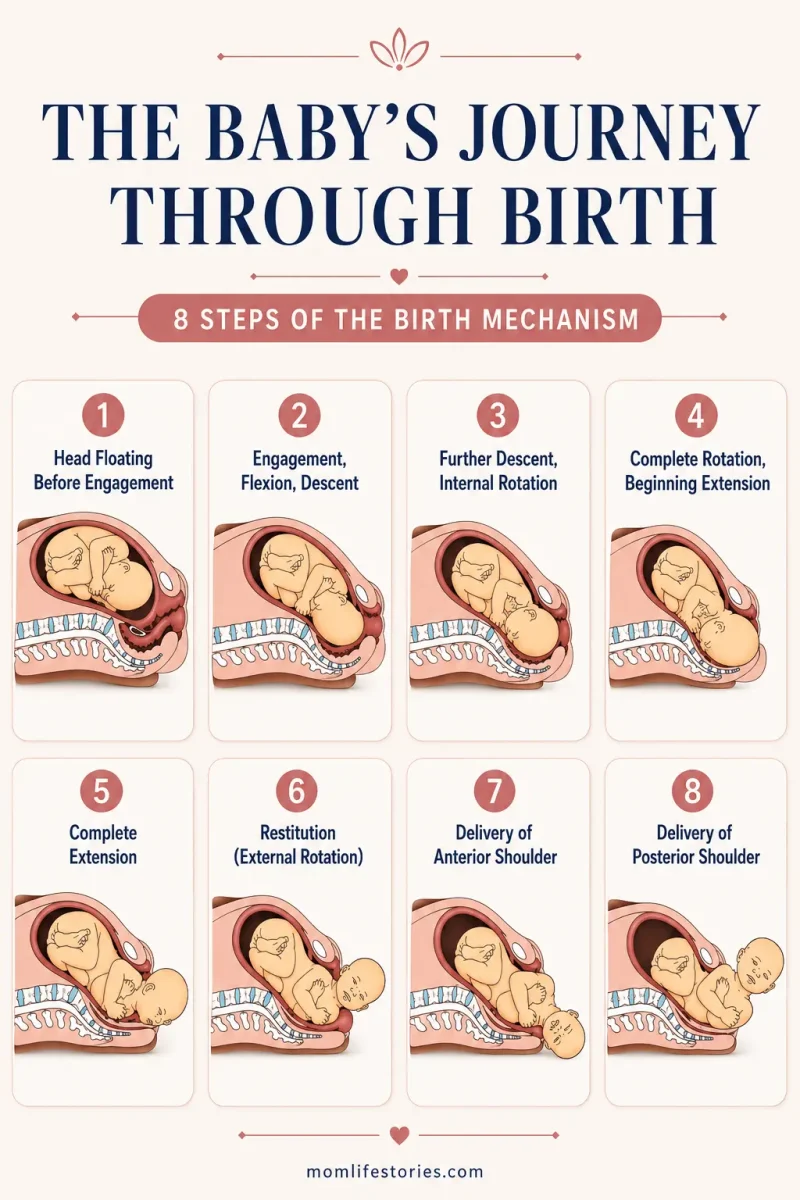
Once the cervix has fully dilated and disappeared, the most recognizable stage of labor begins: the pushing stage. Your baby’s head starts moving down through the birth canal, rotating as needed to adapt to the shape of your pelvis. Contractions continue every 1–3 minutes, and each wave helps guide your baby a little farther down.
As this stage progresses, most women feel an increasingly strong urge to push, often described as a sensation similar to needing a bowel movement. This pressure is actually a positive sign that your baby is moving in the right direction. For first-time moms, the pushing stage typically lasts between one and three hours, while for subsequent births it may be much shorter, sometimes lasting only 10–20 minutes.
When your baby’s head reaches the perineum, you may experience an intense stretching or burning sensation as the tissues gradually open. Then comes the moment you’ve been waiting for: your baby’s head is born, followed by one final rotation toward your thigh, and shortly afterward, the rest of your baby’s tiny body enters the world.

The First Moments, the Placenta, and the Golden Hour
And finally, your baby is here. Resting on your chest, being gently dried off and wrapped in a warm blanket by the midwife. You provide warmth from below, while the blanket keeps your baby warm from above. For a short time, the umbilical cord continues delivering oxygen and nutrients until your baby’s lungs fully take over the work of breathing. Once the cord stops pulsating, it is clamped, and if your partner wishes, they may have the opportunity to cut it.
Meanwhile, your baby receives their first Apgar assessment. Healthcare providers evaluate five key signs: heart rate, breathing, skin color, muscle tone, and reflexes. These first checks help determine how well your newborn is adjusting to life outside the womb.
Labor, however, is not quite over yet. The next step is the delivery of the placenta, which usually happens within about 30 minutes of birth. In most cases, a single gentle push is enough to help the placenta separate and be delivered. Afterward, the doctor or midwife carefully examines it to ensure that it is complete and that everything has progressed safely.

Although most moms are completely focused on their newborn by this point, the next two hours are still considered part of the birth process. During this observation period, your care team monitors bleeding, checks that the uterus is contracting properly, and keeps an eye on your overall recovery.
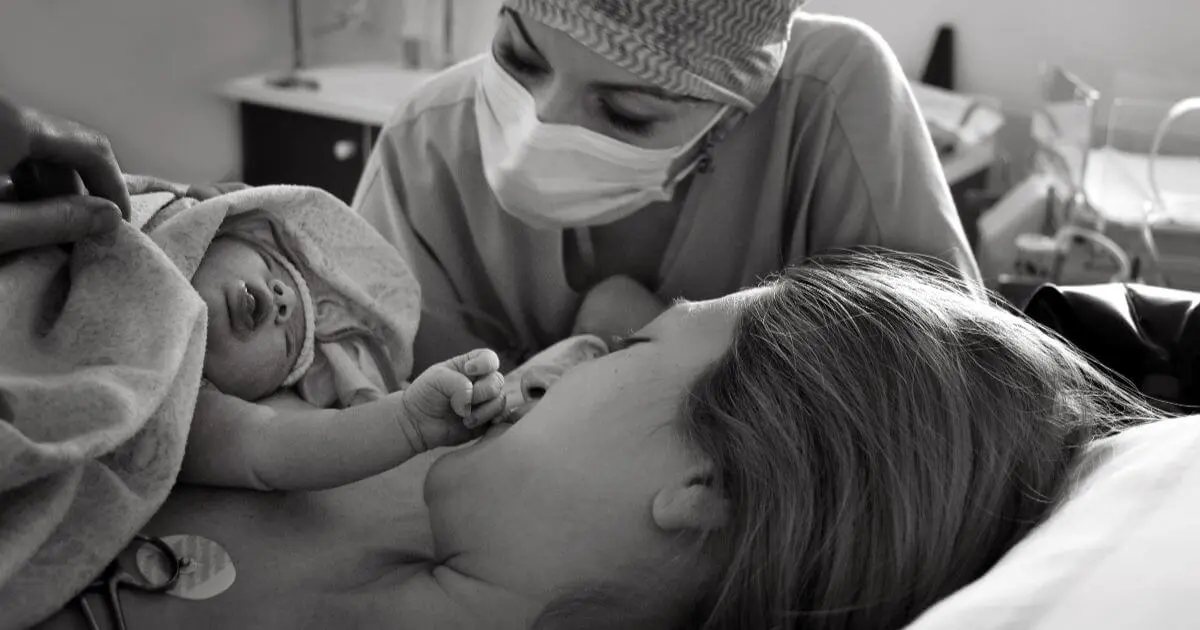
At the same time, this period is also known as the Golden Hour — those precious first moments of skin-to-skin contact, the first feeding, and the first time you truly look at one another. These are moments that can never be recreated. Later, your baby will be weighed, dressed, and examined more thoroughly, but by then something extraordinary has already happened: not only has a baby been born, but a new family has begun.
👉If you’d like to walk this journey feeling more prepared, more confident, and a little less worried, visit the Little Lifesavers page and explore our free downloadable resources. They’ll help you stay organized, plan ahead, and create the kind of calm and clarity you need most right now.
👉And if birth stories, real experiences, and the emotional journey of childbirth matter to you, you’ll find more honest reflections and preparation in our Childbirth section.