

Matrescence: Why Do You Feel Like a Different Person After Giving Birth?
There’s a word that most women have never heard, even though almost every mother experiences what it describes: matrescence. It may be one of the most important words that no one—not even your own mom—ever told you before childbirth.
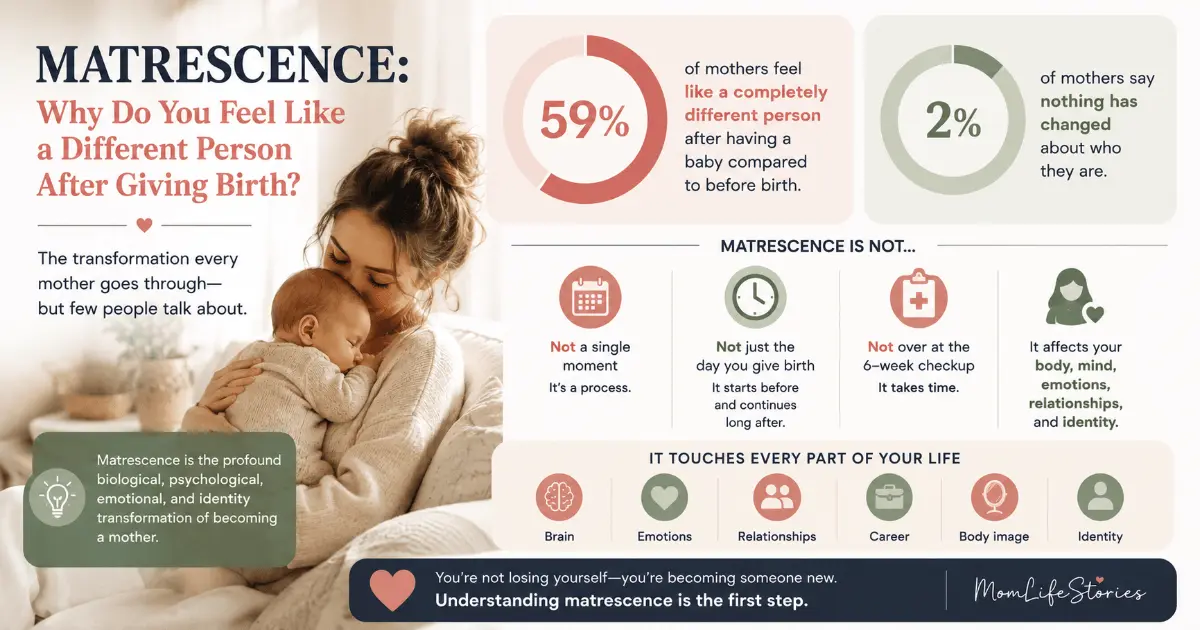
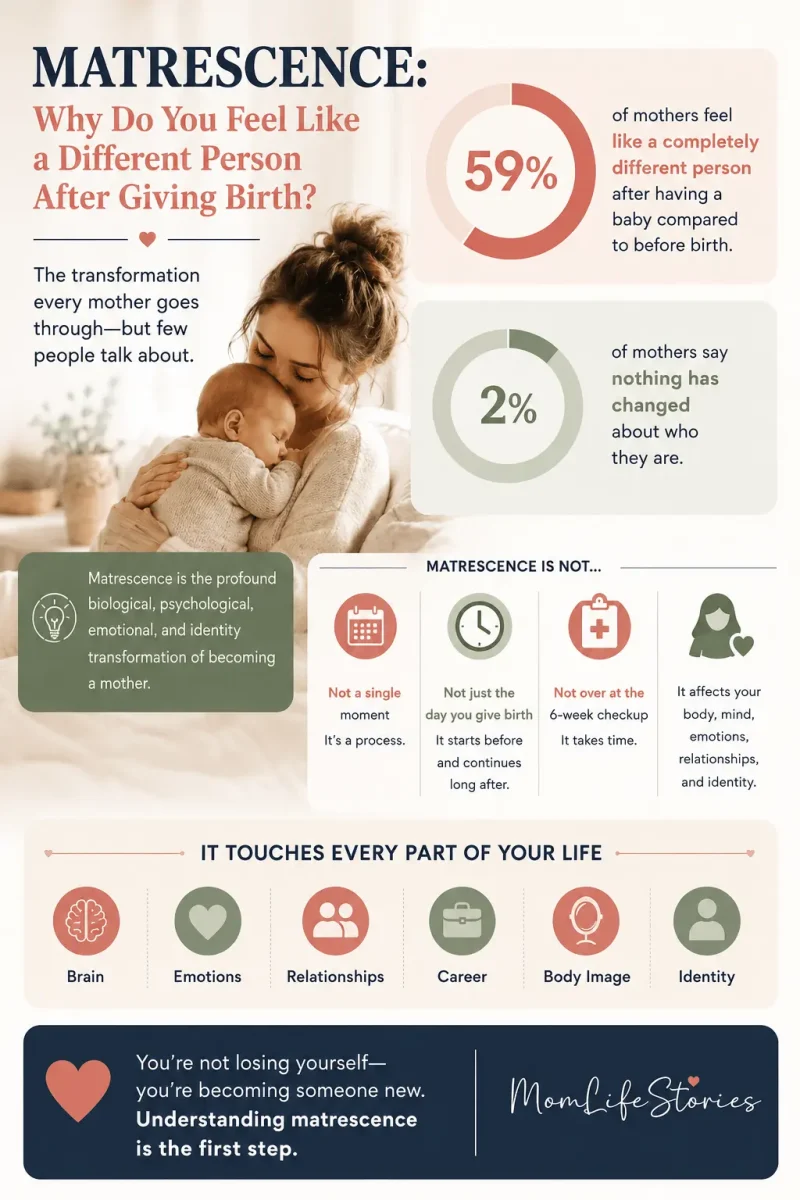
Matrescence is the profound biological, psychological, emotional, and identity transformation a woman goes through when she becomes a mother. It’s not a single moment, it doesn’t begin on the day you give birth, and it certainly doesn’t end at your six-week postpartum checkup.
According to one survey, 59% of mothers feel like a completely different person after having a baby, while only 2% say nothing has changed. If you’ve ever looked in the mirror and wondered, “Who am I now that I’m a mom?”—this article is about exactly that. And sometimes, simply discovering that this experience has a name can bring an incredible sense of relief.
What Is Matrescence, Really?
The concept of matrescence is based on the idea that becoming a mother isn’t a single event—it’s a gradual developmental process. That’s why many researchers compare it to adolescence.
Just as the teenage years bring months or even years of hormonal, emotional, and social changes, motherhood reshapes your life in much the same way. It’s not only your body that changes—your brain, relationships, priorities, and even your sense of identity evolve as well.
Researchers describe matrescence as a complex biopsychosocial transformation because it affects nearly every aspect of your life. It influences your body, mind, emotions, family and friendships, career, and the way you see yourself. In short, matrescence changes far more than your role—it transforms who you are.
Why Is It Important to Put a Name to What You’re Experiencing?
Many women mistake the uncertainty, emotional overwhelm, and loss of their former identity that often come with motherhood as a personal failure.
But matrescence isn’t a diagnosis or a mental illness. It’s the natural developmental process of becoming a mother. It isn’t something you need to “recover” from—it’s something you gradually grow through. Just as adolescence doesn’t happen in a few weeks, matrescence takes time, patience, understanding, and support.
For me, it showed up in a very unexpected way. During pregnancy, I suddenly became convinced that everyone was staring at my growing belly. At my bachelorette party, I was certain that everyone in the restaurant was looking at me.
After my first baby was born, things changed even more. I started overthinking absolutely everything. Before every walk, I would mentally go over the route five times, making sure it was completely safe to get from point A to point B—as if danger was waiting around every corner. In reality, it was just an ordinary afternoon walk with a stroller.
Looking back, I can smile at how overly cautious and overprepared I was. At the time, though, those fears felt completely real. Only later did I realize that this wasn’t “being silly”—it was part of my own matrescence journey. My brain had simply rewired itself to put my baby’s safety above everything else.
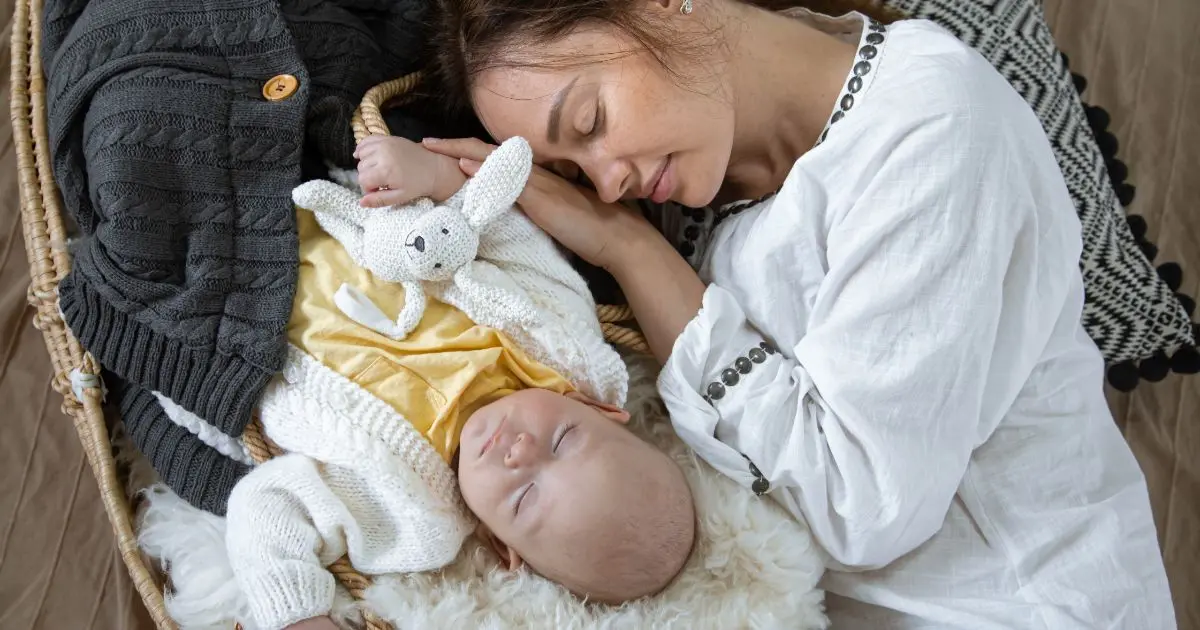
Your Body and Brain Change, Too
Matrescence isn’t just an emotional experience. During pregnancy and after childbirth, your brain, hormones, and entire body undergo remarkable changes.
This helps explain why you may react differently to situations than you did before becoming a mother. Your priorities shift, you may become more emotionally sensitive, and things that once seemed unimportant can suddenly feel deeply significant. It’s no surprise that many moms describe it as seeing the world through a completely new lens.
According to modern research, this is one of the most remarkable examples of adult brain plasticity. Your brain literally creates new neural connections to help you adapt to the demands of motherhood and care for your baby.
That’s why it’s important to be patient with yourself if multitasking feels harder, your concentration isn’t what it used to be, you need more sleep, or your patience seems shorter than before. These aren’t signs of weakness—they’re signs that your body and brain are adapting to an entirely new stage of life.
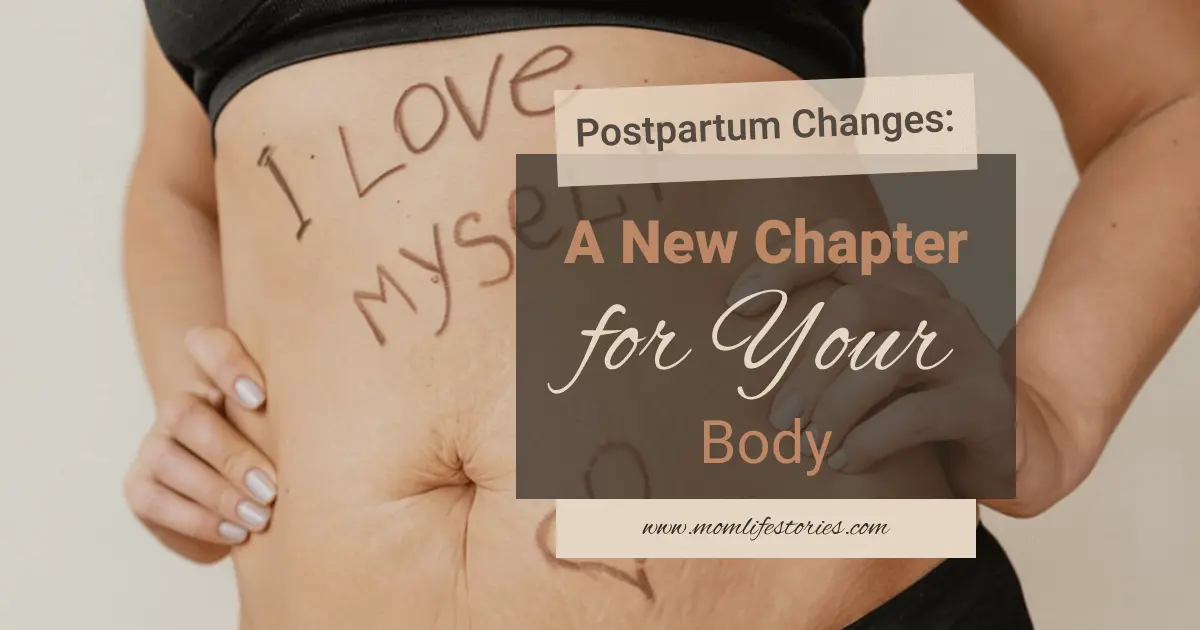
👉 Your transformation doesn’t stop with your emotions—your body changes too. Discover what happens after childbirth, what’s completely normal, and how to support your recovery in our guide: 👉 Postpartum Changes: A New Chapter for Your Body.
What You Lose… and What You Find Along the Way
Becoming a mother doesn’t just bring new roles—it also comes with real losses. Your daily routine changes, spontaneity fades, your career may take a back seat, friendships can shift, and at times, it may feel as though you’ve lost a part of the person you used to be.
But the two can exist at the same time. You can love your child with all your heart while still missing the woman you were before motherhood.
The good news is that matrescence doesn’t only take—it gives, too. Many women discover a deeper sense of self-awareness, greater empathy, new priorities, and an inner strength they never knew they had.
Motherhood isn’t about losing yourself—it’s about becoming someone new. Matrescence is a complex transformation where loss and growth exist side by side, shaping the woman you’re becoming every single day.
How Can You Navigate This Season More Mindfully?
The first—and perhaps most important—step is acceptance. Remind yourself that you’re not the same person you were before becoming a mother—and that’s completely normal. Motherhood doesn’t just change your daily life; it changes you, too.
It can also make a huge difference to connect with other mothers who are willing to talk honestly about their experiences.
When you realize that other women share the same questions, emotions, and uncertainties, those feelings become much less isolating.
Participants in a 2026 matrescence education pilot program reported that simply learning about the concept of matrescence brought an immediate sense of relief.
For many, finally having a word to describe what they had been experiencing helped everything make sense.
If you feel you need additional support, consider finding a therapist or a community that understands the concept of matrescence. It can be incredibly validating when someone recognizes not just your symptoms, but the entire transformation you’re going through.
The Support Around You Matters, Too
Becoming a mother isn’t a journey you have to navigate alone. Your partner, family, and close friends all play an important role in helping this transition feel safer, easier, and more manageable.
When the people around you understand what matrescence is, they’re far more likely to respond with patience, empathy, and understanding. Instead of seeing your mood swings, uncertainty, or changing reactions as overreacting or being “too sensitive,” they’ll recognize them as a natural part of the transformation into motherhood.
Sometimes, simply helping your loved ones understand what’s happening inside you can make a world of difference. It allows both practical help and emotional support to better match what you truly need during this season.
Becoming a mother isn’t something that happens in a single day. Matrescence is a long, sometimes challenging, yet deeply transformative journey. It doesn’t mean you’re losing yourself—it means you’re gradually discovering the woman you’re becoming through motherhood. The more you understand this process, the easier it becomes to embrace your own transformation with compassion and confidence.
👉When does motherhood really begin? Is it the moment you see a positive pregnancy test, hear your baby’s heartbeat, or hold your newborn for the first time? Explore the emotional journey of becoming a parent in 👉Becoming a Parent Isn’t a Single Moment — So When Does It Actually Begin?
Frequently Asked Questions About Matrescence
👉If you’d like to walk this journey feeling more prepared, more confident, and a little less worried, visit the Little Lifesavers page and explore our free downloadable resources. They’ll help you stay organized, plan ahead, and create the kind of calm and clarity you need most right now.
👉And if you’re looking for stories and support that speak to the emotional side of motherhood — beyond diagnoses and definitions — you’ll find more honest, real-life reflections in our Motherhood section.